




Every procedure at Hair Transplant Edinburgh is carried out by a doctor on the GMC register
Our Edinburgh clinic is in the heart of the city, easy to reach by tram, bus, or train
An honest assessment of your donor supply and realistic outcome, no sales pressure, no obligation to proceed
We limit patient numbers so your surgeon gives your case the full attention it deserves
An eyebrow transplant is a permanent solution to thinning, patchy, or absent eyebrows. Whether you have over-plucked in years gone by, lost eyebrow hair through an autoimmune condition, or simply never had the density you wanted, a surgical transplant restores natural-looking brows that grow, shed, and regrow just like any other hair on your body.
At Hair Transplant Edinburgh, Dr Aziz Elgindi and Dr Mohammed Ditta perform eyebrow transplants using follicular unit extraction (FUE). Grafts are taken one by one from the scalp donor area, typically at the back of the head, and placed individually into the brow region at precise angles to replicate the natural low, flat growth pattern of eyebrow hair.
Eyebrow Transplant in Edinburgh
Eyebrow hair grows differently from scalp hair. It lies almost flat against the skin, follows a strict directional pattern, and frames the upper face. Restoring it surgically requires a surgeon with the skill to mimic those angles precisely with each individual graft, rather than placing follicles in generic directions.
At our Edinburgh clinic, each graft is inserted at an acute angle using a fine implanter to match the natural brow architecture. The result, once fully grown in at 12 months, sits flush with the skin and looks indistinguishable from brows that were never lost. You can shape, trim, and even colour them exactly as you would any eyebrow hair.
How many grafts are needed?
Most patients require between 150 and 400 grafts per eyebrow, depending on how much natural hair remains and the desired thickness. A full bilateral reconstruction from very sparse or absent brows typically uses 250 to 400 grafts per side. A partial fill to increase density on top of some existing hair requires fewer, usually 100 to 200 per side. Dr Elgindi or Dr Ditta will assess your brow structure and target density at consultation to give you a personalised figure.
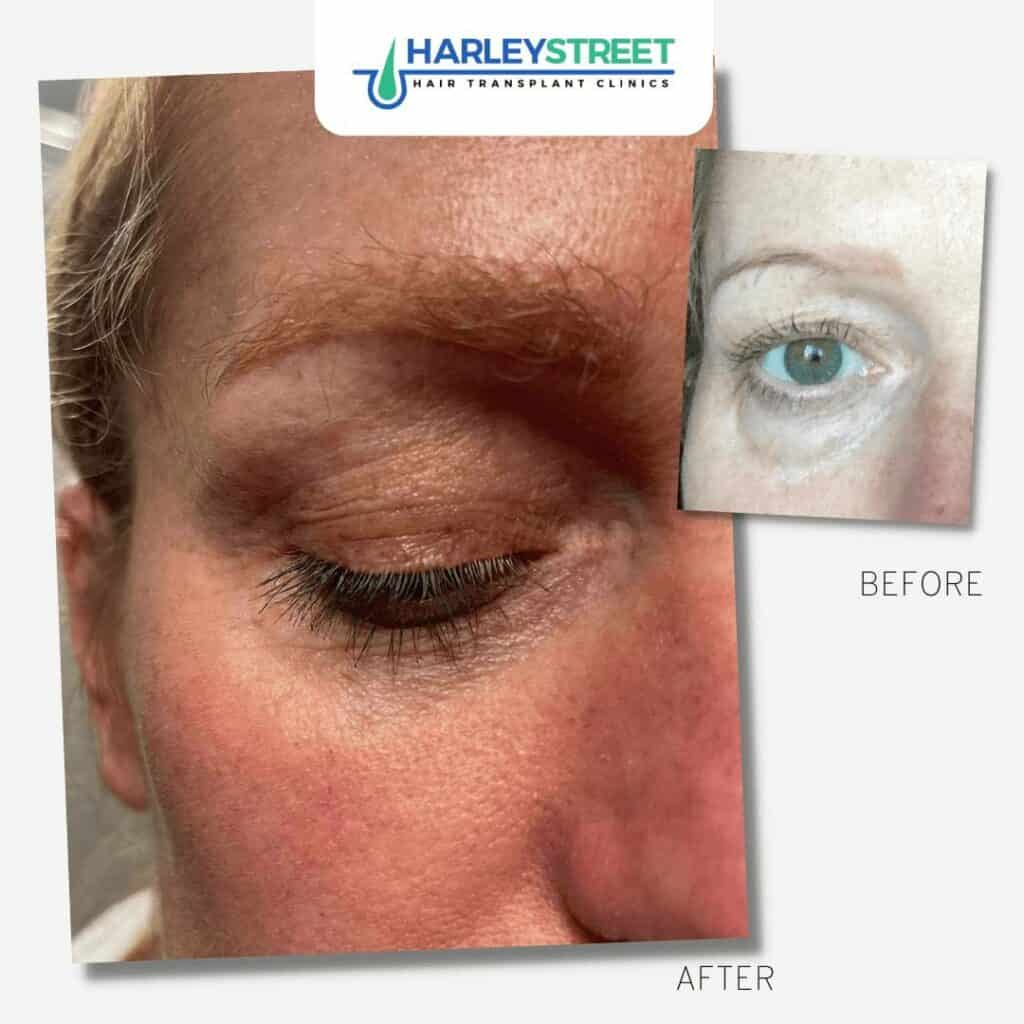
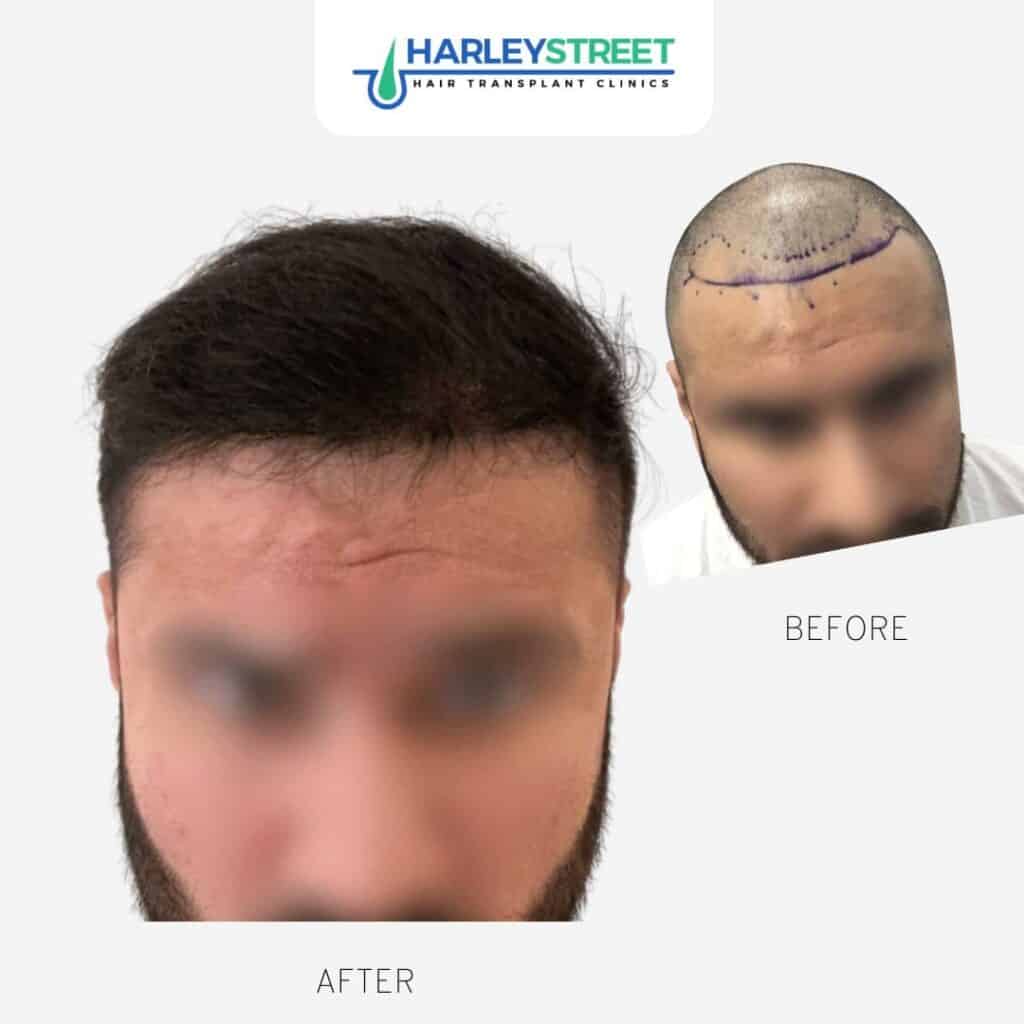
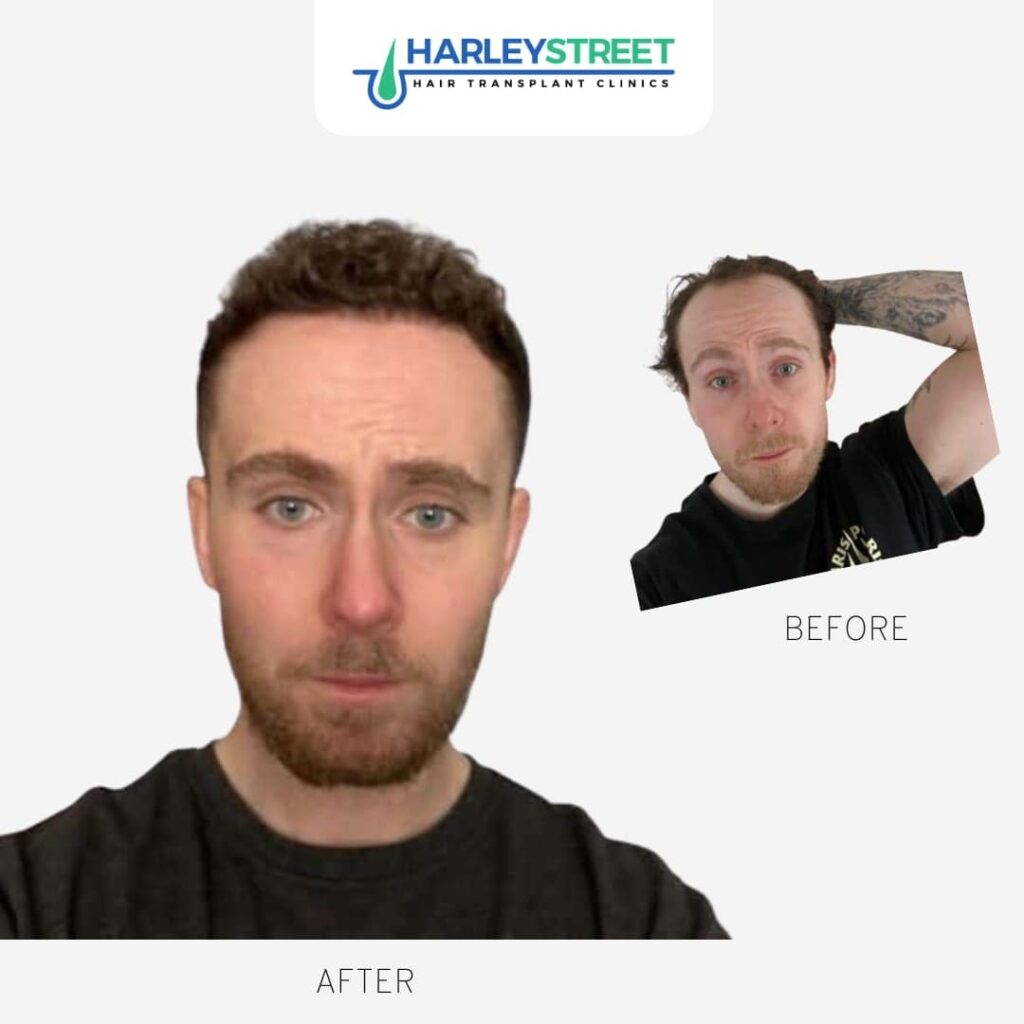
Before and After Eyebrow Transplant Results in Edinburgh
A selection of results from patients treated at our Edinburgh clinic. Every procedure shown was performed by our GMC-registered surgeons. View the full gallery.
Causes of Eyebrow Hair Loss
The most common reason patients present for an eyebrow transplant is over-plucking over many years. Repeated removal of hair from the same follicles can cause permanent damage, particularly at the outer third of the brow, where regrowth tends to thin out first.
Beyond plucking, the following conditions frequently affect eyebrow density:
- Telogen effluvium: a diffuse shedding response to physiological stress, illness, surgery, or nutritional deficiency, often affecting brows as well as scalp hair
- Alopecia areata: an autoimmune condition that can target brow follicles in isolation or alongside scalp hair loss
- Frontal fibrosing alopecia: a form of scarring alopecia that progressively destroys the brow hairline from the outside in, often requiring surgical restoration once active inflammation is controlled
- Hypothyroidism: an underactive thyroid is a well-recognised cause of outer-third brow thinning, the classic sign described as Hertoghe’s sign
- Trauma and burns: scarring to the brow region from injury, surgery, or radiation can permanently damage follicles in the affected area
- Natural sparsity: some patients simply have always had light or asymmetric brows, with no underlying pathology
If you have a medical cause such as alopecia areata or frontal fibrosing alopecia, the surgeon will discuss timing. Transplanting into an area of active inflammation is not appropriate, as ongoing autoimmune activity can destroy the transplanted follicles. Stability for at least 12 months is the standard requirement before surgery.
The Procedure: What to Expect on the Day
An eyebrow transplant is carried out under local anaesthetic as a day procedure. You will be awake throughout and should feel no pain, only mild pressure during the injection of anaesthetic. The procedure typically takes three to four hours from start to finish.
Stage 1: Consultation and design
Before any extractions begin, Dr Elgindi or Dr Ditta will draw the planned brow shape on your face with you sitting upright. You will review the shape together and make any adjustments before anything is started. The shape must suit your face, not a generic template.
Stage 2: Graft extraction
Fine follicular units are extracted one at a time from the donor area, usually at the lower back of the scalp where hairs grow in the finest diameter. Single-hair follicular units are preferred for eyebrow work, as they produce the most natural result.
Stage 3: Recipient site creation
The surgeon creates tiny incisions in the brow at the precise angle, depth, and direction mapped out in the design phase. This is the most technically demanding step and directly determines whether the outcome looks natural.
Stage 4: Graft placement
Each graft is placed individually into the recipient sites. This takes patience and precision, as the direction of growth at the outer corners of the brow differs markedly from the inner head.
Stage 5: Recovery and discharge
You will leave the clinic on the same day with aftercare instructions and any prescribed medication. The brow area will be slightly pink and swollen for the first few days, which settles without intervention.
Recovery and the Growth Timeline
The first two weeks are primarily about protecting the grafts. You should avoid touching, rubbing, or submerging the transplanted area, and you should sleep slightly elevated for the first week to reduce swelling.
Around weeks two to four, the transplanted hairs enter a shedding phase. This is completely normal and expected. The follicles remain in the skin and will begin producing new hair growth from approximately month three or four onwards.
Month 1 to 3: Grafts shed; brow looks sparse. The skin heals, and the follicles establish.
Month 4 to 6: New hairs appear, initially fine. Growth is patchy at this stage.
Month 6 to 9: Density increases noticeably. Most patients are happy to go without covering at this point.
Month 12: Full result. The transplanted brow hair grows at the rate of scalp hair, so it will need to be trimmed periodically to maintain the desired length.
Because eyebrow hair does not naturally enter a resting phase as frequently as scalp hair, the transplanted follicles will tend to grow more continuously. This is something to factor in for maintenance, but it also means the result remains full without the seasonal variation some scalp transplant patients notice.
Eyebrow Transplant Cost in Edinburgh
Eyebrow transplant cost in Edinburgh depends on the number of grafts required and the complexity of the design. At Hair Transplant Edinburgh, your patient advisor will discuss all costs with you at your free consultation, once the surgeon has assessed your brows and confirmed the graft count needed.
As a general guide, eyebrow procedures typically require fewer grafts than scalp procedures, which is reflected in the pricing. You can find a detailed breakdown of all our hair transplant prices, including eyebrow procedures, on our hair transplant cost Edinburgh.
Finance options are available for those who prefer to spread the cost. Ask your patient advisor about payment plans at consultation.
If you are also considering a hairline hair transplant, our FUE hair transplant Edinburgh covers scalp procedures in full. Patients who want to address both eyebrow and hairline hair loss at the same time can discuss combining procedures at consultation. For patients with more extensive hair loss, our crown hair transplant page covers vertex restoration. We also provide transgender hair transplant treatments for patients seeking full facial and scalp hair restoration as part of their transition.
Am I a Candidate for an Eyebrow Transplant?
You are likely a good candidate if:
- Your eyebrow loss is stable and not caused by active inflammation (such as active frontal fibrosing alopecia or untreated alopecia areata)
- You have adequate donor hair on your scalp in fine-diameter areas
- You have realistic expectations about the growth timeline and the need for periodic trimming
- You are in good general health and not on medications that significantly affect wound healing
You may need to defer surgery if:
- You have active autoimmune-driven hair loss affecting the brows
- You have experienced brow loss for fewer than 12 months with no established stable baseline
- You have very limited scalp donor hair (rare, but relevant if you have also had scalp transplant procedures)
The surgeon will also discuss whether you are better suited to DHI technique for graft placement, which allows the surgeon to angle implantation without pre-made recipient sites and can offer additional precision for eyebrow work. Alternatively, our FUT method may be discussed if a larger graft count is anticipated and donor harvest volume is a consideration.
Make the best investment in yourself and find out more about how we can help eliminate hair loss for good!
Where to Find Us
Hair Transplant Edinburgh is centrally located and easily accessible from across the Lothians and beyond. Find us at our Edinburgh clinic:
Hair Transplant Edinburgh
93 George Street
Edinburgh
EH2 3ES
Our Edinburgh clinic is well connected by public transport:
- Tram: West End Princes Street stop (5 minute walk)
- Train: Edinburgh Waverley and Haymarket stations (both within 15 minutes on foot)
- Bus: Multiple Lothian Buses routes along Princes Street and Queensferry Street
If you are travelling by car, the clinic is a short drive from the city centre with several pay and display car parks nearby in the West End area.
FAQs
Yes. Because donor hair follicles are taken from the scalp, they retain their genetic coding and continue to produce hair for life. The result is as permanent as a scalp hair transplant, although the transplanted hairs will grow longer than eyebrow hair typically does and will need to be trimmed periodically to maintain the right length and shape.
Most patients need between 150 and 400 grafts per eyebrow for a full restoration. A partial fill on top of some existing hair typically requires fewer, around 100 to 200 per side. The surgeon will assess your existing brow density and the design you want to confirm the number at consultation.
Yes. Eyebrow transplants are performed on men and women. In men, loss is often caused by scarring, trauma, or alopecia areata rather than over-plucking. The design principles differ slightly because a male brow sits differently to a female brow, but the surgical technique is identical. Dr Elgindi and Dr Ditta design brows appropriate to each patient’s face and gender presentation.
The procedure is performed under local anaesthetic. The only discomfort is during the injection of the anaesthetic itself, which takes a couple of minutes. Once the area is numb, you should feel no pain, only mild pressure. Most patients are surprised by how comfortable the procedure is once the anaesthetic is in.
When performed by an experienced surgeon, eyebrow transplants produce results that are indistinguishable from natural eyebrows. The key is the angulation and direction of each graft. Eyebrow hair grows at a very low angle to the skin, and each follicle must be placed to replicate that exactly. Results look natural to others and under close inspection, including in photographs with direct lighting.
Yes, in some cases. Whether combination procedures are appropriate on the same day depends on the total graft count required across both areas, your donor capacity, and procedure time. Your surgeon will assess this at consultation. Patients with both scalp and eyebrow hair loss sometimes stage the two procedures separately to avoid a single very long session, but same-day combination is possible for smaller scalp cases.
Patient Testimonials
Aside from achieving fantastic results, we believe that keeping in touch with our patients before, during and after their hair transplantation procedure is paramount – it helps to keep our patients feeling calm and in control. We’re always on hand to provide guidance, support and aftercare advice. Time and again, our patients tell us that this is what sets us apart from other clinics.
You can read our great reviews of FUE hair transplants over on Google and Trustpilot