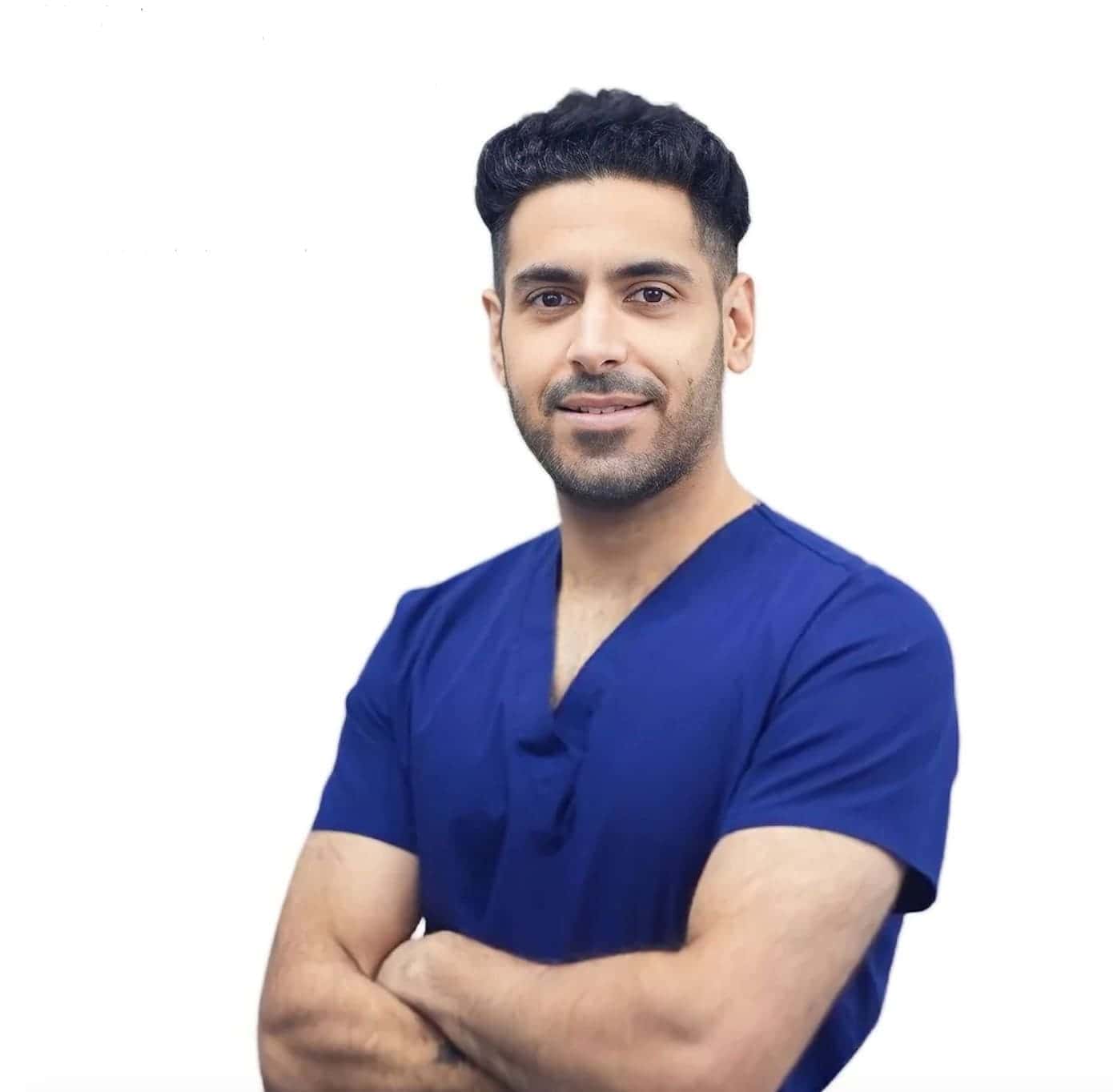



Every procedure at Hair Transplant Edinburgh is carried out by a doctor on the GMC register
Our Edinburgh clinic is in the heart of the city, easy to reach by tram, bus, or train
An honest assessment of your donor supply and realistic outcome, no sales pressure, no obligation to proceed
We limit patient numbers so your surgeon gives your case the full attention it deserves
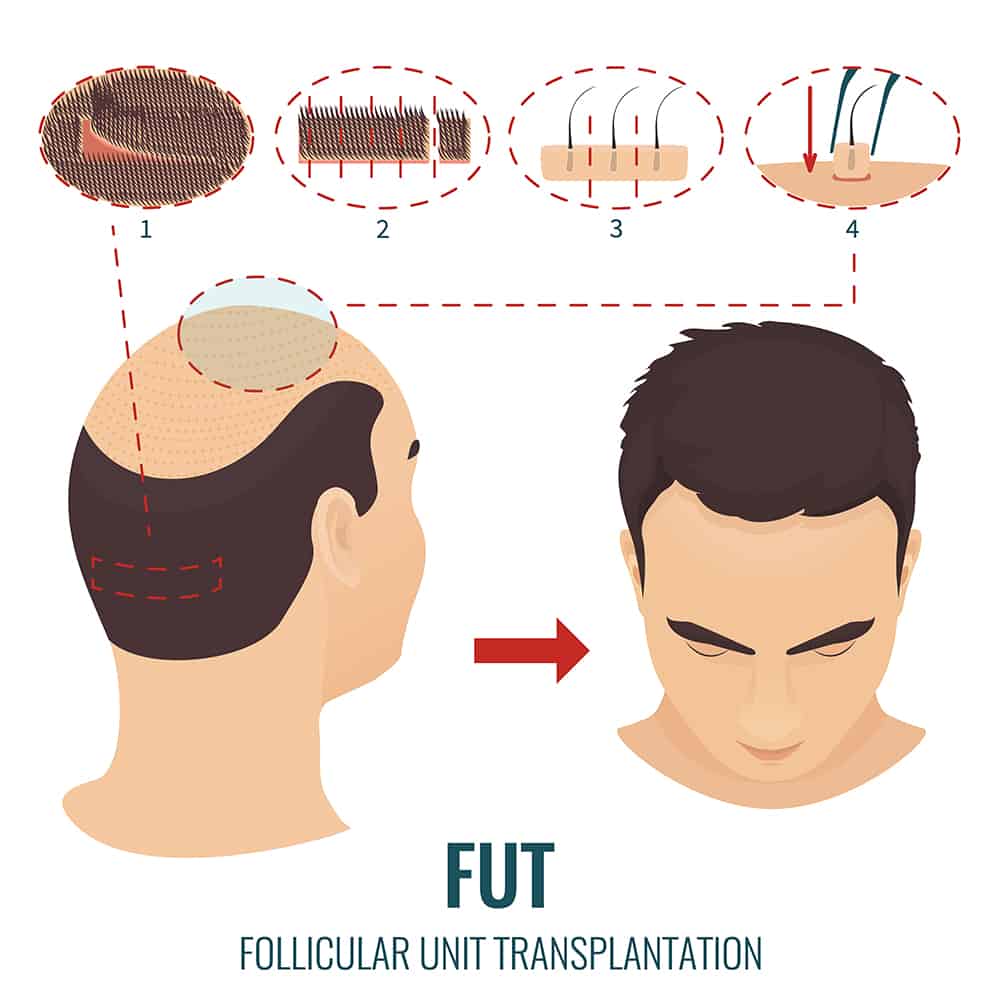
FUT, or Follicular Unit Transplant, is a well-established hair restoration technique that involves removing a strip of donor tissue from the back of the scalp, dissecting it into individual follicular units, and placing those units into the areas where hair has thinned or receded. At Hair Transplant Edinburgh, FUT remains a considered option for the right patient, and our surgical team will set out clearly whether it is the approach best suited to your situation.
The technique has a specific profile of advantages that make it the preferred route for some patients, particularly those who want to avoid shaving the donor area before their procedure.
FUT Hair Transplant in Edinburgh
FUT is carried out at our Edinburgh clinic as a day procedure under local anaesthetic. The surgical session typically runs for four to eight hours depending on the number of grafts involved, with patients resting comfortably throughout.
The defining characteristic of FUT is the donor method. Rather than extracting follicles one by one as in FUE, the surgeon removes a narrow horizontal strip from the donor zone at the back of the scalp. This strip is then taken to the surgical team, who carefully dissect it under magnification into individual follicular units, each containing one to four hairs. Those units are then implanted into the recipient area using fine placement tools.
Because the donor strip is removed intact and the surrounding scalp closed with sutures, the top of the donor area is not shaved. Patients who wear their hair at a length that covers the back of the head will not have a visibly treated donor zone during recovery. This is a significant practical consideration for many patients, including women and anyone who wants to keep their procedure private in the weeks after surgery.
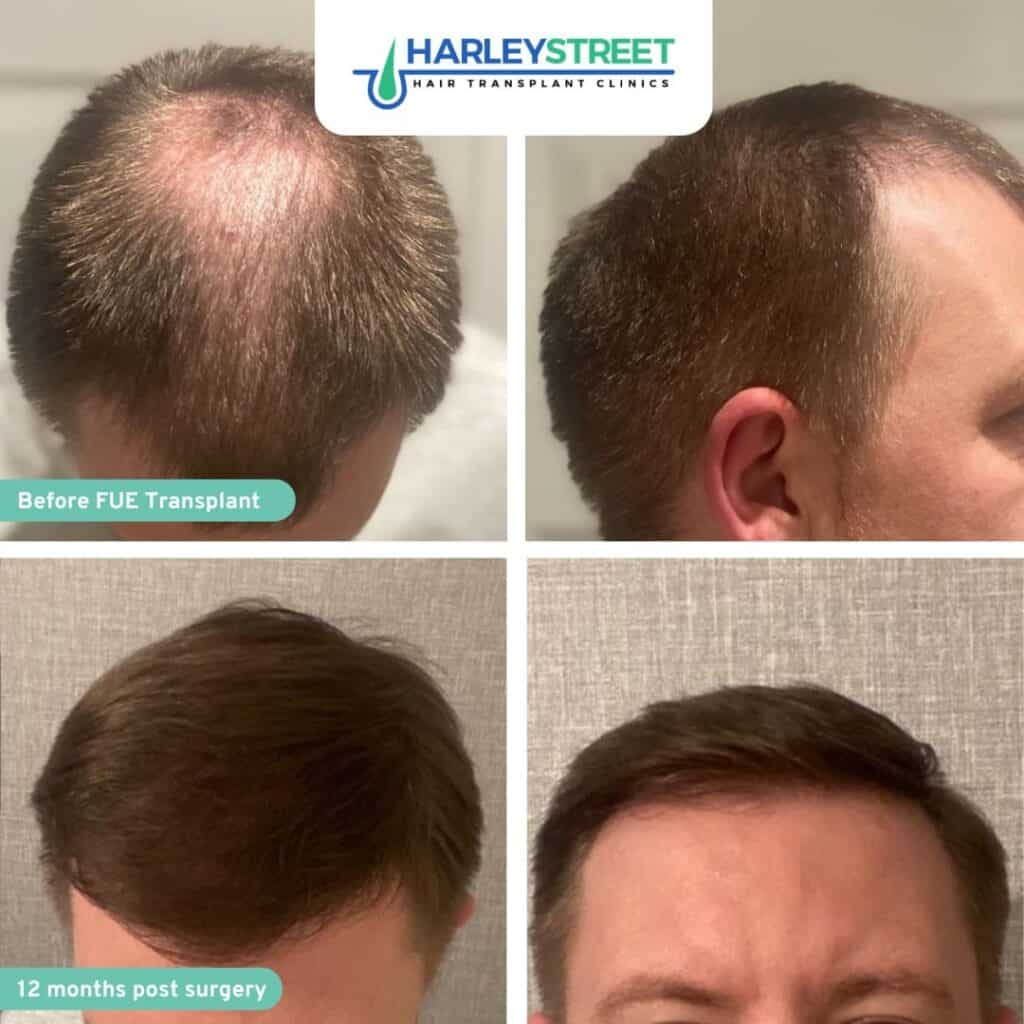
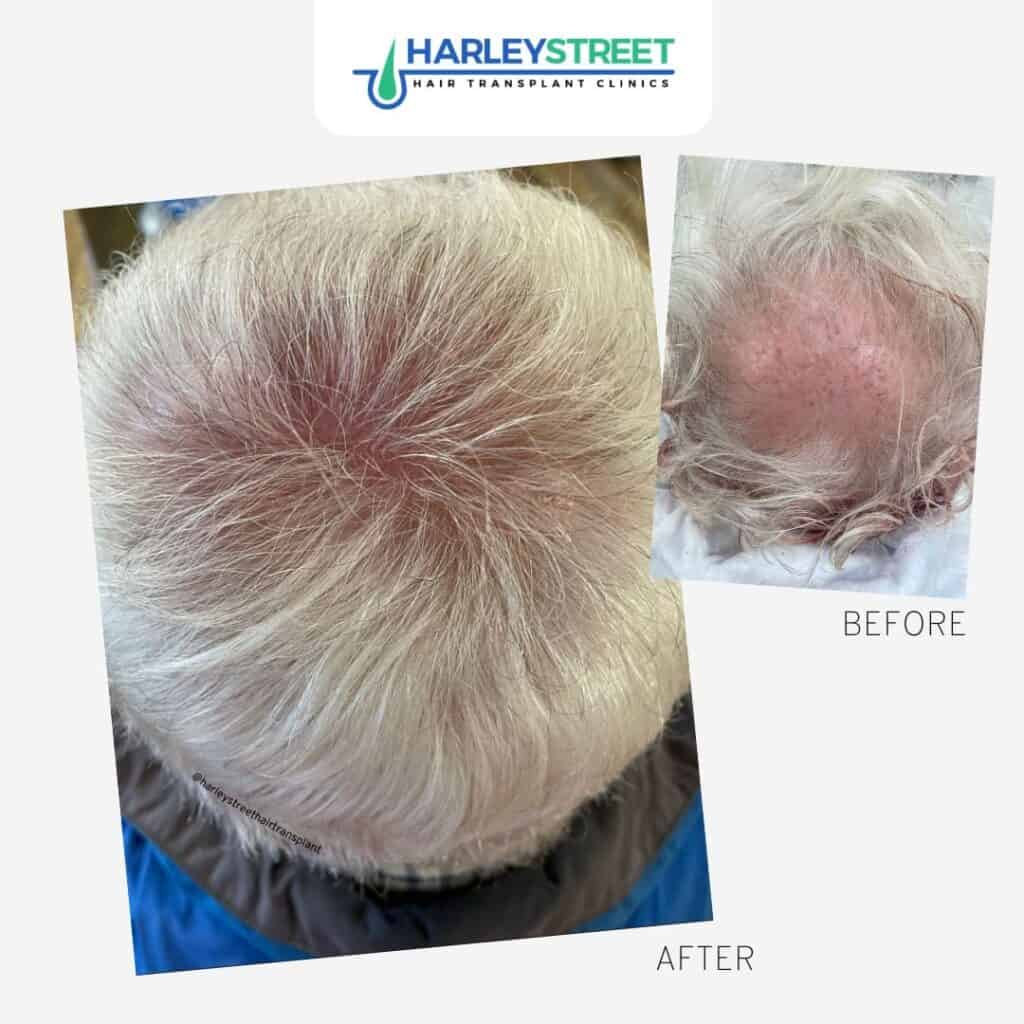
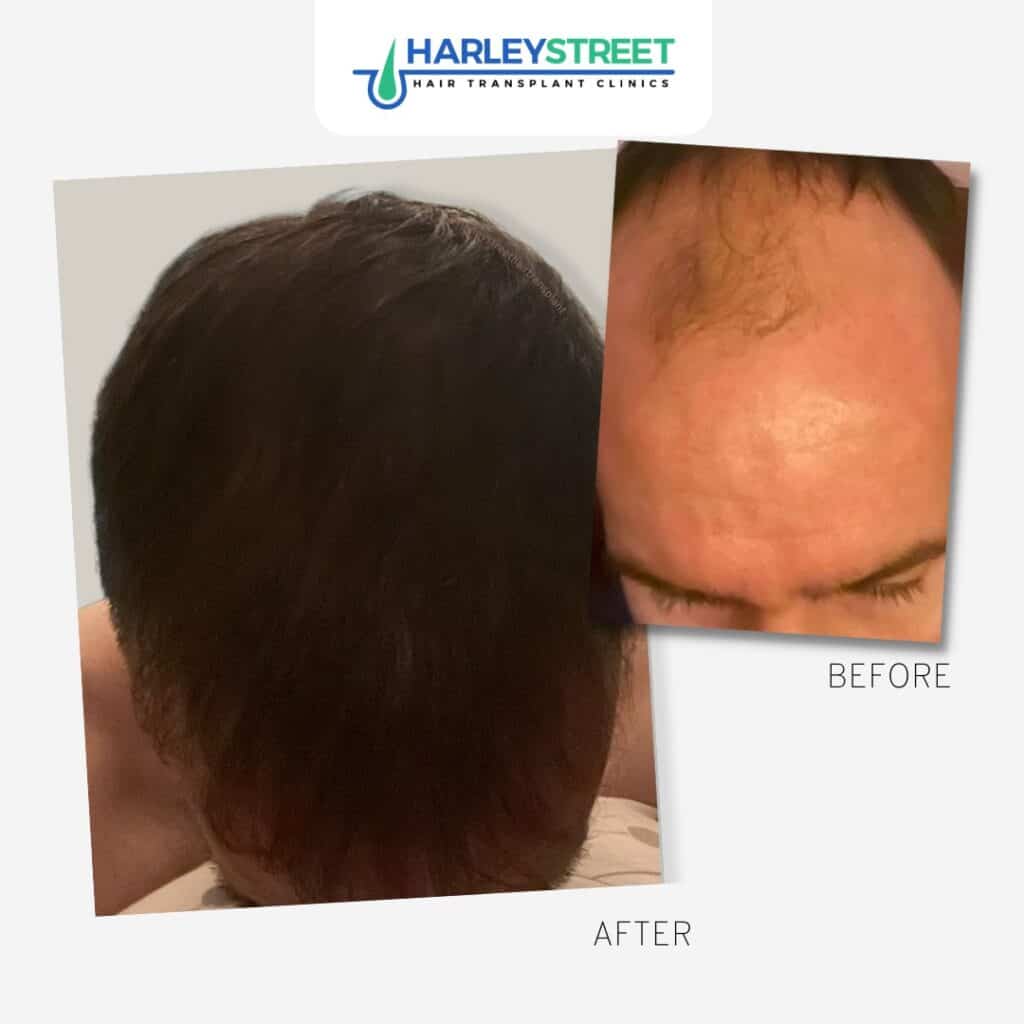
Before and After FUT Hair Transplant Results in Edinburgh
A selection of results from patients treated at our Edinburgh clinic. Every procedure shown was performed by our GMC-registered surgeons. View the full gallery.
How FUT Surgery Works
The procedure follows a clear sequence at our Edinburgh clinic. Before surgery, your surgeon marks the donor area and the recipient hairline or coverage zone based on the plan agreed at your consultation.
Local anaesthetic is applied to the donor area first. Once the area is numb, the surgeon excises the donor strip, typically measuring two to three centimetres wide and up to twenty-five centimetres long depending on the graft yield required. The scalp edges are then brought together and closed with fine sutures, which are removed at a follow-up appointment approximately ten to fourteen days later.
While the donor wound is being closed, the surgical team works in parallel to dissect the strip under magnification. Each follicular unit is separated with care to preserve the follicle and its surrounding tissue. Grafts are kept in a holding solution throughout this process.
The recipient area is anaesthetised separately. Your surgeon creates the implantation sites based on the natural direction and angle of your existing hair, then places each graft individually. The arrangement of the grafts across the hairline hair transplant area or crown hair transplant zone is planned to produce a natural result that accounts for your existing hair pattern and the likelihood of future loss.
Who Is a Good Candidate for FUT?
FUT suits a particular profile of patient. Your surgeon will assess several factors at consultation, but the technique tends to work well in the following circumstances.
Patients who do not want to shave the donor area are often the strongest candidates for FUT. Women experiencing hair loss or hairline changes, patients undergoing hair restoration as part of a transgender hair transplant, and anyone who wants to maintain their existing hair length during recovery may all benefit from the strip approach for this reason alone. FUT is also used for beard transplant and eyebrow transplant cases where donor-area shaving would be particularly disruptive.
Patients who need a high graft yield in a single session may also be better served by FUT. The strip method allows the surgical team to access a large number of grafts efficiently, which can be practical when treating significant hair loss across the crown or scalp. Your surgeon will advise whether the graft count required for your case is better achieved through FUT or through a planned series of FUE sessions.
Stable hair loss is important regardless of technique. Patients who are still losing hair rapidly may see results partially undermined by continued recession after surgery. Your surgeon will factor in your age, your hair loss history and your family pattern when advising on timing.
FUT vs FUE: Understanding the Differences
Both FUT and FUE transplant healthy follicles from the donor zone to areas of thinning or loss. The techniques differ in how those follicles are harvested and in the marks they leave behind.
FUT leaves a linear scar along the back of the scalp where the strip was removed. In most patients this heals as a fine white line that sits beneath surrounding hair. Patients who wear their hair very short at the back may find this visible. FUE, by contrast, produces small circular extraction marks distributed across the donor zone, which are not detectable at normal hair lengths but can become visible with very close shaving.
FUE does not require sutures in the donor area and typically involves a shorter recovery for the donor zone. FUT may require slightly longer before strenuous physical activity is comfortable, given the sutured incision.
For graft quality, both methods produce comparable follicular units when performed by an experienced surgeon. FUT does not allow the surgeon to cherry-pick individual grafts across a wide donor area in the way FUE does, as the grafts come from within the excised strip. FUE gives more flexibility in harvesting from different zones.
Neither approach is universally superior. The right choice depends on your individual circumstances, and your Edinburgh surgeon will give you a clear recommendation at consultation.
FUT Cost in Edinburgh
FUT pricing at Hair Transplant Edinburgh reflects the surgical time involved, the size of the donor strip and the number of grafts placed. For a full breakdown of indicative costs across procedures and graft counts, visit our hair transplant cost Edinburgh. A precise quote is provided after your free consultation, once your surgeon has assessed your donor density and the extent of the area being treated.
Make the best investment in yourself and find out more about how we can help eliminate hair loss for good!
Where to Find Us
Hair Transplant Edinburgh is centrally located and easily accessible from across the Lothians and beyond. Find us at our Edinburgh clinic:
Hair Transplant Edinburgh
93 George Street
Edinburgh
EH2 3ES
Our Edinburgh clinic is well connected by public transport:
- Tram: West End Princes Street stop (5 minute walk)
- Train: Edinburgh Waverley and Haymarket stations (both within 15 minutes on foot)
- Bus: Multiple Lothian Buses routes along Princes Street and Queensferry Street
If you are travelling by car, the clinic is a short drive from the city centre with several pay and display car parks nearby in the West End area.
FAQs
FUT leaves a linear scar along the back of the scalp where the donor strip was removed. In most patients this heals as a fine, pale line that sits within the surrounding hair and is not visible at normal hair lengths. Patients who wear their hair very short at the back should discuss this with their surgeon at consultation, as the scar may be more noticeable at very close cut lengths. The donor area is closed with sutures, which are removed at a follow-up appointment around ten to fourteen days after surgery.
No. This is one of the main practical advantages of FUT. Because the donor strip is removed as a single piece and the surrounding scalp is sutured closed, the donor area does not need to be shaved before surgery. Patients who want to maintain their hair length throughout recovery, or who want to keep their procedure private, often choose FUT for this reason. The recipient area may require localised trimming depending on your hair length and the size of the treatment zone.
The number of grafts available from a single strip depends on the length and width of the excised tissue and the follicular density in that area. A typical FUT session yields between 1,500 and 3,500 grafts, though this varies between patients. Your surgeon will give you an accurate estimate at consultation based on an assessment of your donor zone. For patients needing a very high graft count, FUT can be an efficient way to achieve this in one procedure.
Most patients are comfortable with light activity and desk work within a few days of surgery. The sutures in the donor area are removed after ten to fourteen days, and any pulling or tightness in that area typically resolves within two to three weeks. Strenuous exercise and activities that stretch the scalp should be avoided for around three to four weeks. The transplanted hair will shed in the first few weeks, which is a normal part of the healing process, with new growth beginning to emerge from around three to four months after surgery.
Yes, and for many female patients FUT is the preferred approach. Women experiencing hair thinning, hairline changes or patchy loss often want to avoid shaving any part of their head before surgery, and FUT makes that possible. Female hair loss patterns also vary from male pattern baldness, and the consultation process at our Edinburgh clinic takes time to assess the underlying cause before recommending a technique or proceeding with surgery.
FUT and DHI differ at both the donor and recipient stages. FUT harvests grafts via strip excision; DHI extracts individual follicles using a micro-punch, as in FUE, then implants them using a Choi pen in a single action. DHI does not leave a linear scar and offers very precise graft placement, but requires shaving of the donor area. FUT avoids donor-area shaving and can produce a high graft yield efficiently. Your surgeon will set out which approach is more appropriate for your goals at consultation. You can also read more about the DHI technique on our dedicated page.
Patient Testimonials
Aside from achieving fantastic results, we believe that keeping in touch with our patients before, during and after their hair transplantation procedure is paramount – it helps to keep our patients feeling calm and in control. We’re always on hand to provide guidance, support and aftercare advice. Time and again, our patients tell us that this is what sets us apart from other clinics.
You can read our great reviews of FUE hair transplants over on Google and Trustpilot