




Every procedure at Hair Transplant Edinburgh is carried out by a doctor on the GMC register
Our Edinburgh clinic is in the heart of the city, easy to reach by tram, bus, or train
An honest assessment of your donor supply and realistic outcome, no sales pressure, no obligation to proceed
We limit patient numbers so your surgeon gives your case the full attention it deserves
Crown hair loss is among the most common presentations of male pattern baldness, and also among the most emotionally impactful. Unlike frontal recession, crown thinning is not visible to the person experiencing it, but it is clearly visible to everyone around them. For many patients, the awareness of this creates a persistent self-consciousness that affects how they carry themselves.
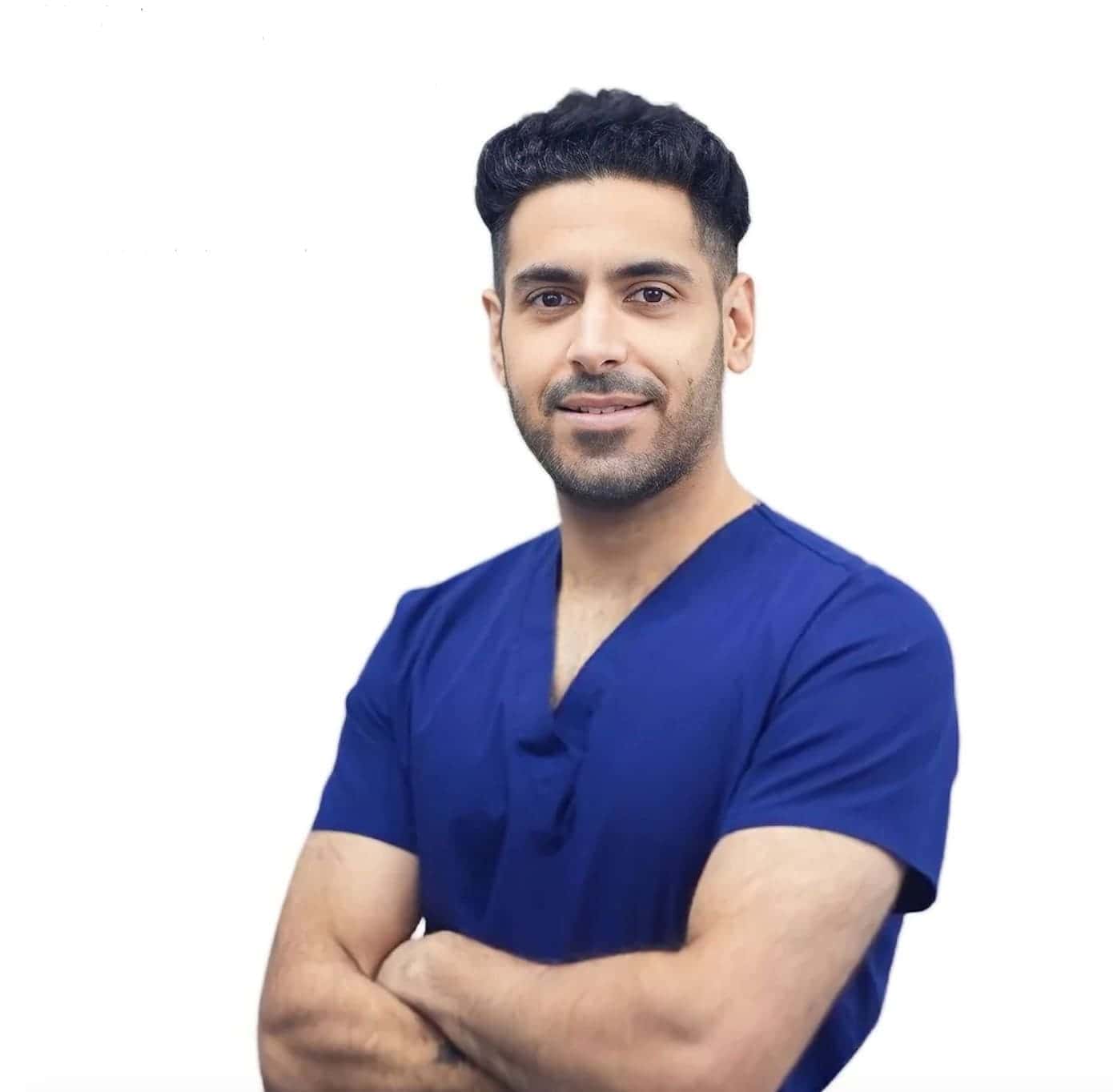
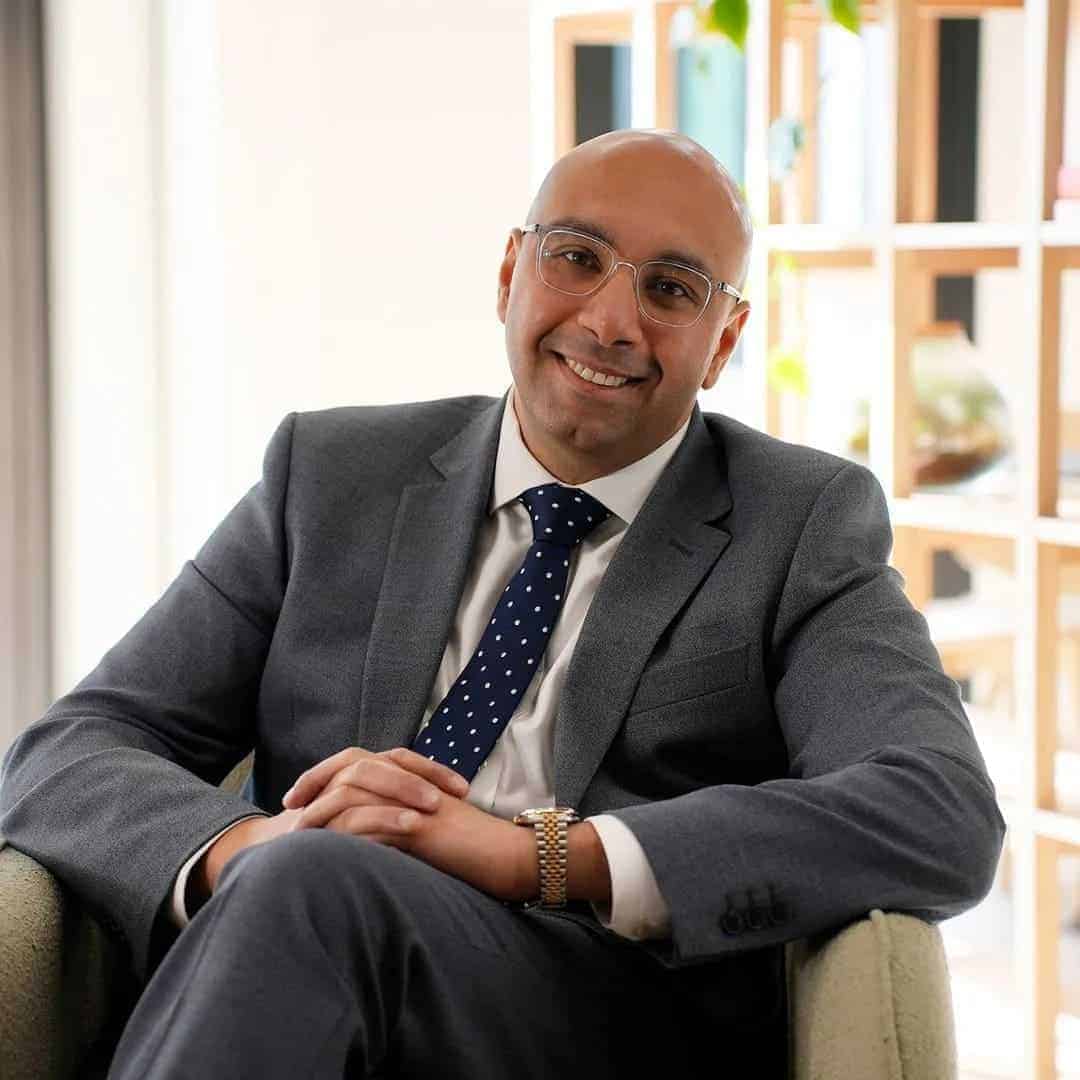
At Hair Transplant Edinburgh, crown hair transplants are performed by Dr Aziz Elgindi and Dr Mohammed Ditta using the FUE (follicular unit extraction) method. Grafts are extracted individually from the donor area and placed into the crown to restore density in the vertex region, with careful planning around the whorl pattern to ensure the result integrates naturally with any surrounding hair.
Crown Hair Transplant in Edinburgh
The crown, also called the vertex, is the uppermost point of the scalp where the hair naturally swirls outward from a central point called the whorl. Hair loss here typically begins as a small thinning circle that gradually widens over time. In some men it remains confined to the vertex; in others it expands to merge with frontal recession to create a large area of overall baldness.
A crown transplant is not the same as a hairline transplant. The crown requires significantly more grafts to create visible density because the growth radiates outward from the central whorl, meaning graft placement must follow the natural spiral pattern. Without matching this pattern, the result looks unnatural under any light.
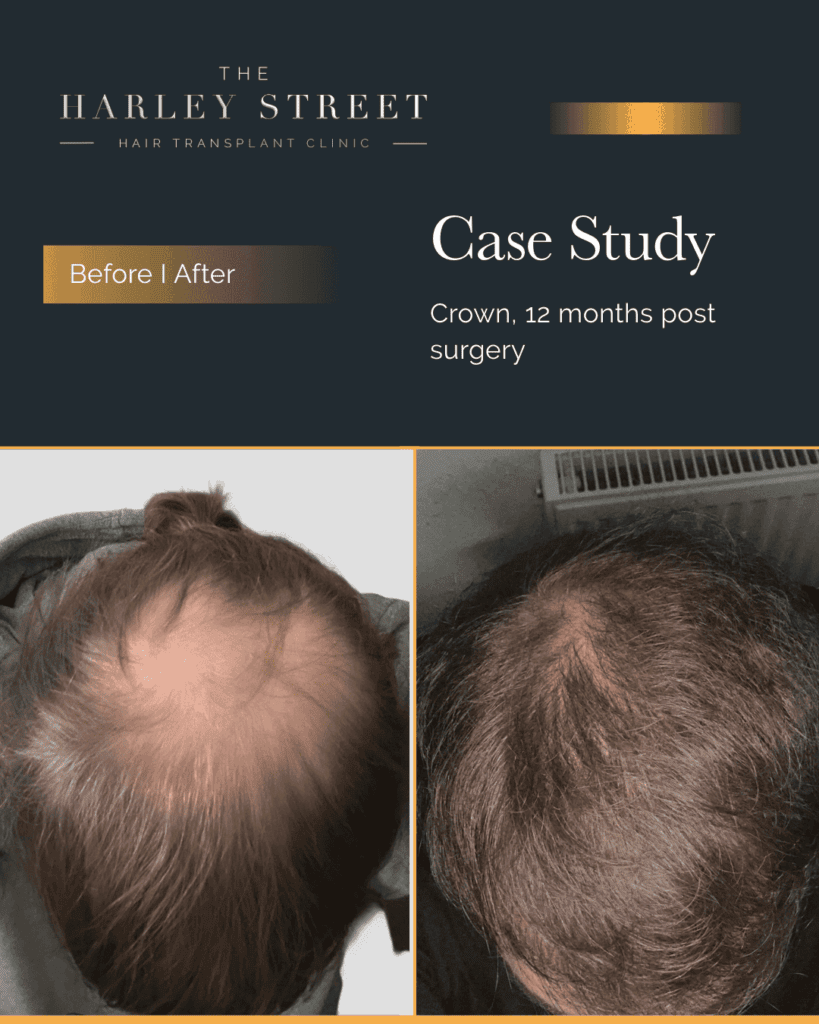
At our Edinburgh clinic, the surgeon maps the whorl position and the direction of natural hair growth before any grafts are placed. Every follicle is inserted at the angle, direction, and depth that matches the surrounding hair pattern. The result, at 12 months, integrates seamlessly with any remaining native hair.
Crown procedures are also commonly discussed alongside hairline transplants, particularly for patients at Norwood scale 4 or above, where both areas are affected. If you are considering coverage across the whole scalp, our hairline hair transplant Edinburgh covers how the two procedures relate and how donor allocation is managed when treating multiple areas.
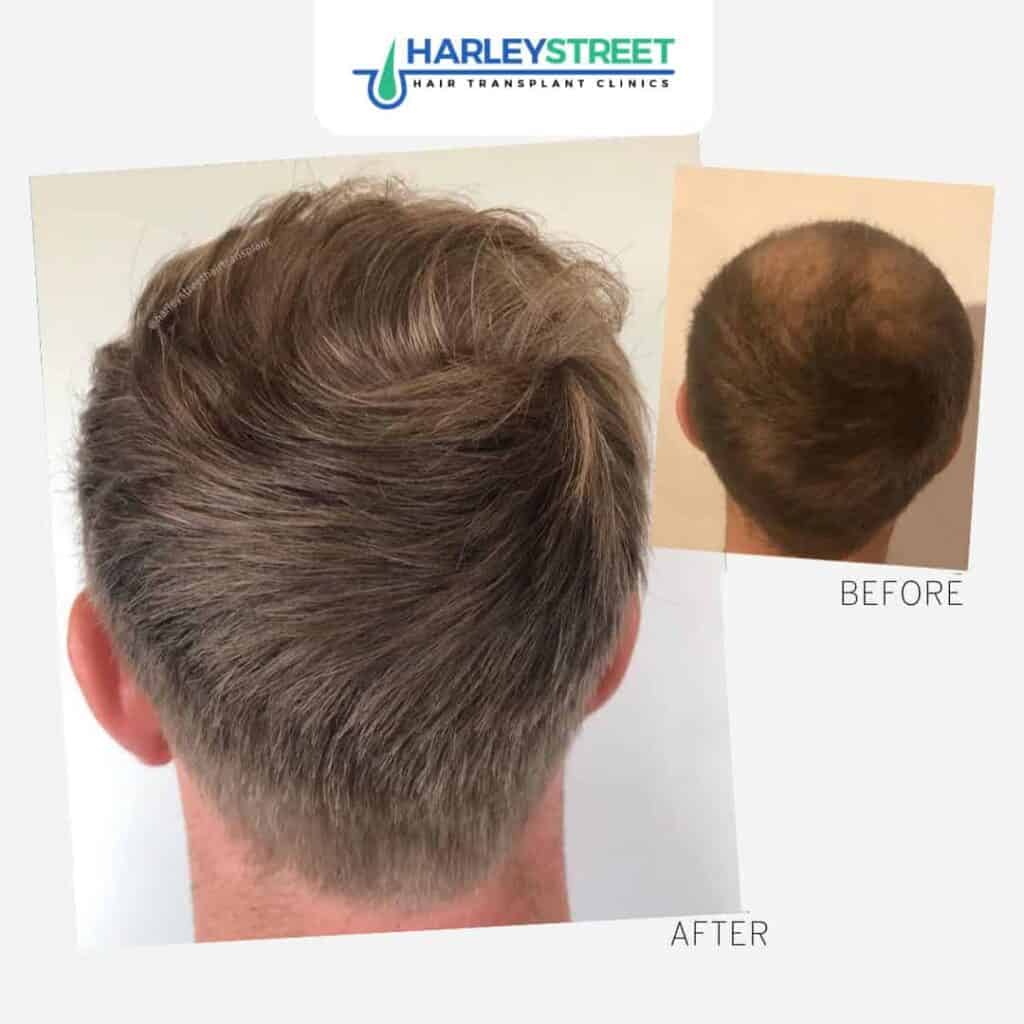
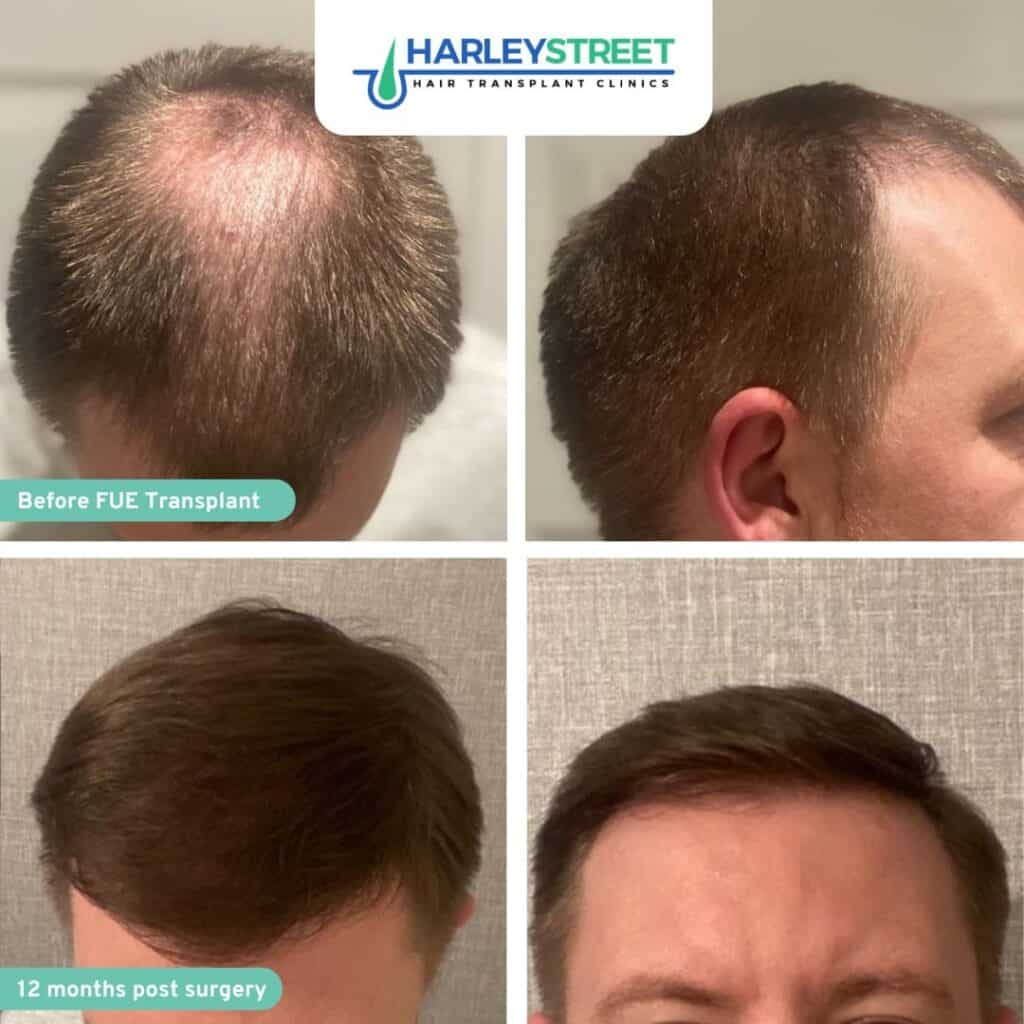
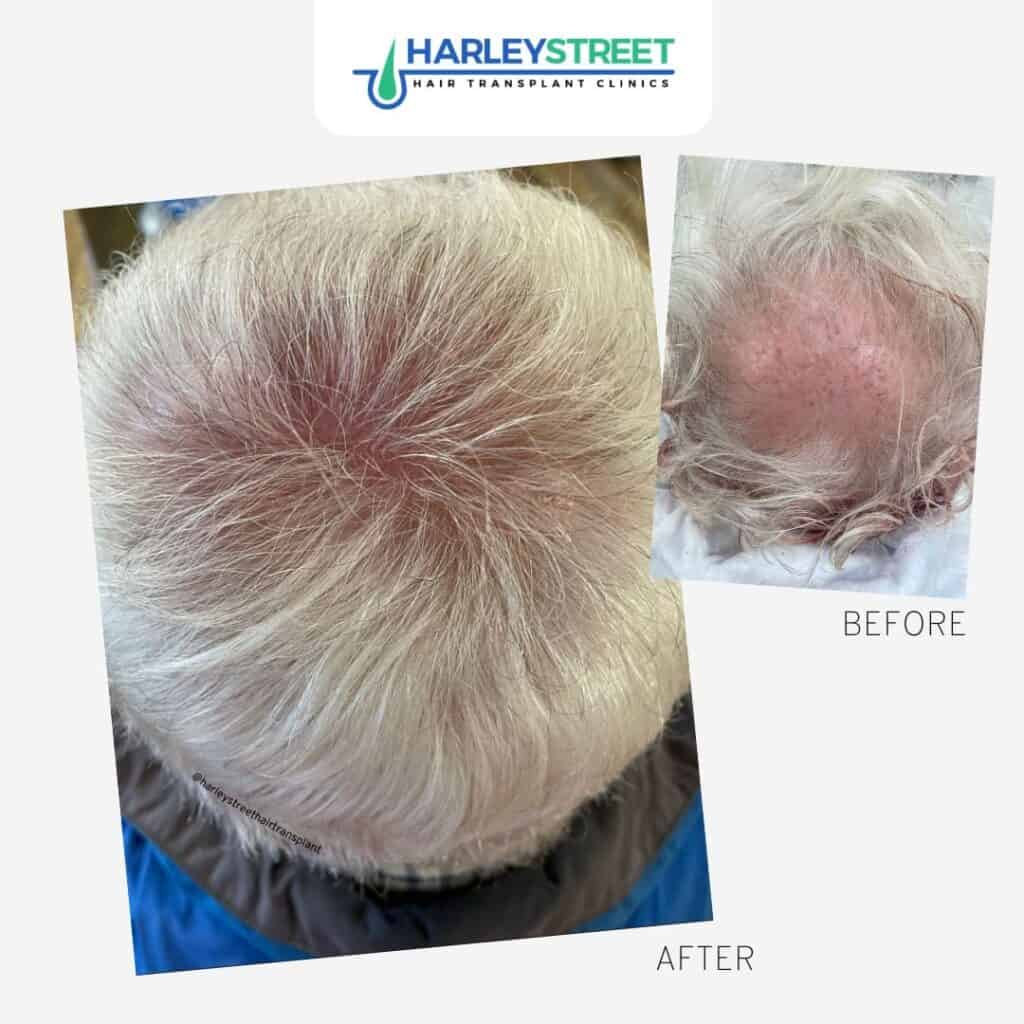
Before and After Crown Hair Transplant Results in Edinburgh
A selection of results from patients treated at our Edinburgh clinic. Every procedure shown was performed by our GMC-registered surgeons. View the full gallery.
Why Crown Transplants Require Careful Planning
The crown is the most graft-intensive area of the scalp to treat effectively. Because hair grows outward from the whorl, a large surface area can remain visibly thin even with a moderate graft count placed without strategic density planning. Three specific factors make crown transplants require more careful pre-operative planning than hairline procedures.
Ongoing progression
Crown thinning caused by androgenetic alopecia continues to progress over time. A graft count that creates good coverage today may be visually inadequate in five years if the loss expands outward from the treated zone. Surgeons who do not account for this progression risk creating an island of transplanted hair surrounded by future recession. Dr Elgindi and Dr Ditta discuss the expected long-term progression of your hair loss pattern at consultation and plan the graft distribution to remain convincing as the condition develops.
Donor supply
Crown procedures often require 2,000 to 4,000 grafts depending on the area and desired density. This is a significant proportion of most patients’ lifetime donor supply. If the hairline also requires treatment, the total donor supply must be carefully allocated across both areas, with enough reserve held back for any future top-up procedures. Rushing into a large crown procedure before planning the full picture can leave insufficient donor hair for other areas that will be needed later.
The whorl
Graft placement in the crown must follow the spiral growth pattern originating from the whorl. Placing grafts perpendicular to this natural flow creates visible irregularities and unnatural-looking density. This is one of the reasons crown transplants reward experience.
How Many Grafts for a Crown Transplant?
Crown transplant graft counts vary significantly based on the size of the area and the target density.
- Early crown thinning (small thinning zone): 1,000 to 1,800 grafts. For a confined vertex patch where a moderate increase in density is sufficient.
- Moderate crown loss (mid-size area): 1,800 to 2,500 grafts. For an expanded thinning zone where meaningful coverage across the whole crown is the goal.
- Advanced crown baldness: 2,500 to 4,000 grafts. For large vertex areas with little remaining native hair. This typically forms part of a staged multi-session plan to manage total donor usage across the scalp.
The surgeon will measure the recipient area at consultation and confirm the graft count needed for your specific presentation. For a full overview of how pricing is calculated, including our per-graft structure, visit our hair transplant cost Edinburgh.
For patients who want to understand how grafts are harvested before committing to the procedure, our FUE hair transplant Edinburgh covers extraction in detail.
FUE vs DHI for Crown Transplants
Both FUE and DHI can be used for crown hair transplants. The choice depends on the graft count required and the specific technical requirements of the whorl area.
FUE with pre-made recipient sites allows the surgeon to plan the full pattern of site angles and directions before any grafts are placed, which some surgeons find gives greater control over the overall whorl architecture. DHI uses an implanter pen to place grafts directly without a pre-made site, and some surgeons prefer this for the crown because it reduces the time between extraction and placement.
At consultation, Dr Elgindi or Dr Ditta will discuss which technique suits your crown anatomy and graft count. For smaller counts with a complex whorl pattern, DHI may be preferred. For larger procedures, FUE is often the more practical approach.
Recovery After a Crown Transplant
Recovery from a crown transplant follows the same timeline as other hair transplant procedures. The transplanted area will have small scabs around each graft site for the first one to two weeks. These shed naturally and should not be picked.
Swelling in a crown procedure typically stays on the top of the head rather than drifting to the forehead as it can in hairline procedures. Most patients can cover the treated area with a loose hat after the first two or three days if needed for social situations.
The shedding phase begins at around week two to four, when the transplanted hairs fall out. This is expected and does not mean the procedure has failed. The follicles remain alive beneath the skin and begin producing new growth from month three or four. The full result is visible at 12 months.
For a detailed timeline with what to expect at each stage, including washing instructions and exercise restrictions, see our hair transplant recovery guide.
Make the best investment in yourself and find out more about how we can help eliminate hair loss for good!
Where to Find Us
Hair Transplant Edinburgh is centrally located and easily accessible from across the Lothians and beyond. Find us at our Edinburgh clinic:
Hair Transplant Edinburgh
93 George Street
Edinburgh
EH2 3ES
Our Edinburgh clinic is well connected by public transport:
- Tram: West End Princes Street stop (5 minute walk)
- Train: Edinburgh Waverley and Haymarket stations (both within 15 minutes on foot)
- Bus: Multiple Lothian Buses routes along Princes Street and Queensferry Street
If you are travelling by car, the clinic is a short drive from the city centre with several pay and display car parks nearby in the West End area.
FAQs
Yes. Grafts taken from the donor area retain their genetic coding and are resistant to the DHT-driven miniaturisation that causes androgenetic alopecia. Once transplanted into the crown, they continue to produce hair for life. However, the native hair surrounding the transplanted area may continue to thin if the underlying hair loss condition progresses, which is why the surgeon plans the procedure with long-term progression in mind.
Many patients achieve satisfactory crown coverage in a single session, particularly if the thinning zone is not too large and density expectations are realistic. Some patients with more advanced loss or who want maximum density choose to stage the treatment across two sessions separated by 12 to 18 months. Your surgeon will confirm the likely number of sessions at consultation based on the area to be treated and your donor supply.
Yes, but only if the combined graft count is achievable in a single session without exceeding donor capacity. Treating both areas requires careful allocation of donor supply so that neither area is under-treated. The surgeon may recommend staging the two areas, beginning with whichever is the higher priority, and returning for the second area once the first result has been assessed. This is the standard approach for patients at Norwood 4 and above.
The transplanted hair is permanent, but the surrounding native hair may continue to thin if androgenetic alopecia is still active. This is why the surgeon at consultation factors in the likely future progression of your hair loss. Medical treatment such as finasteride or topical minoxidil to slow the progression of surrounding native hair loss is often recommended alongside surgery for patients with active androgenetic alopecia.
A crown transplant is a day procedure performed under local anaesthetic. The duration depends on the number of grafts. A 1,500-graft procedure typically takes five to six hours. A larger 3,000-graft session can take eight hours or more. You are awake throughout and can eat, drink, and rest during breaks in the session.
Cost is determined by the number of grafts required, which depends on the size of the crown area and the target density. All pricing is confirmed at your free consultation. You can review our general pricing structure on our hair transplant cost page. Finance options are available for patients who prefer to pay in instalments.
Patient Testimonials
Aside from achieving fantastic results, we believe that keeping in touch with our patients before, during and after their hair transplantation procedure is paramount – it helps to keep our patients feeling calm and in control. We’re always on hand to provide guidance, support and aftercare advice. Time and again, our patients tell us that this is what sets us apart from other clinics.
You can read our great reviews of FUE hair transplants over on Google and Trustpilot