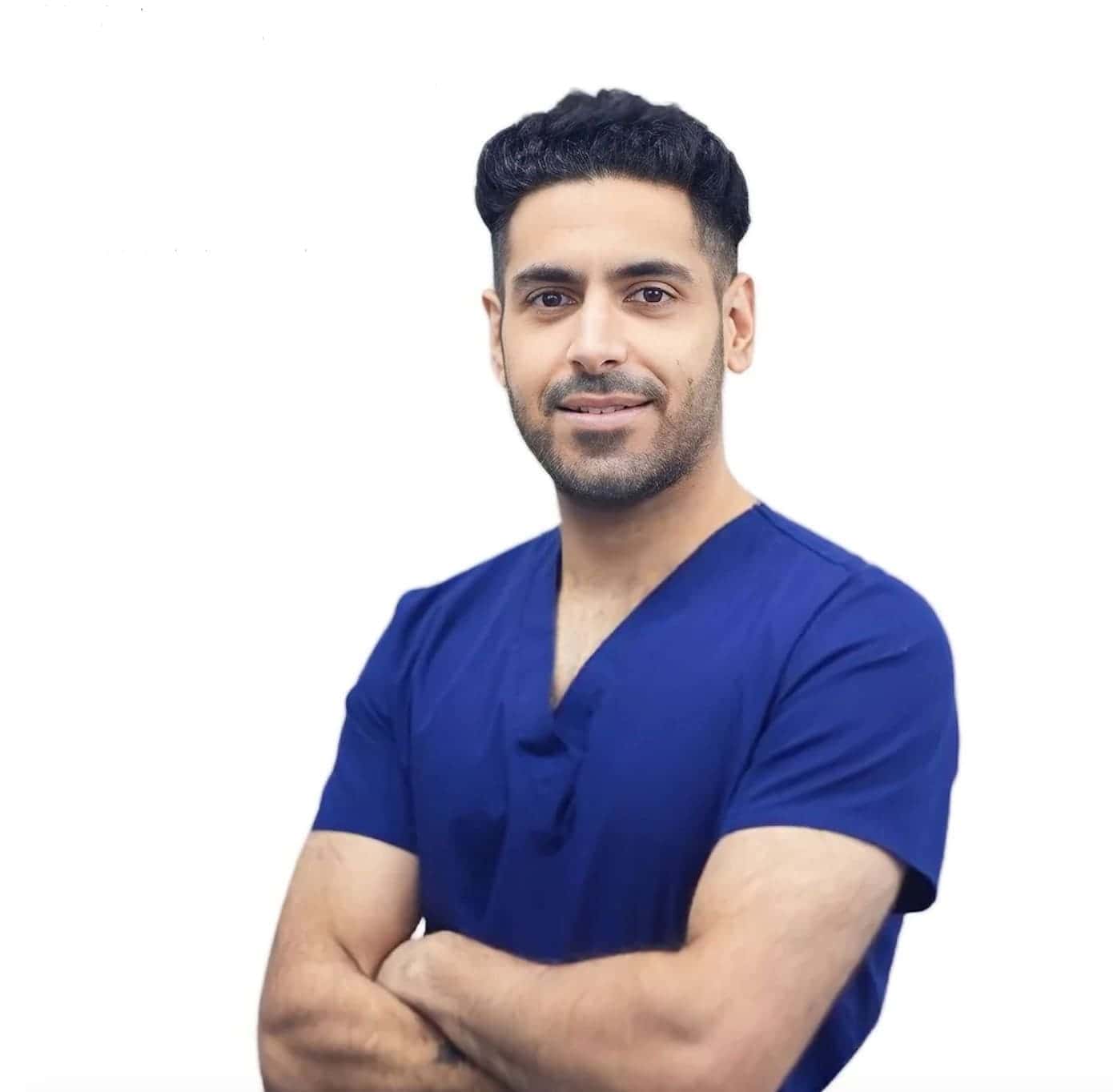



Every procedure at Hair Transplant Edinburgh is carried out by a doctor on the GMC register
Our Edinburgh clinic is in the heart of the city, easy to reach by tram, bus, or train
An honest assessment of your donor supply and realistic outcome, no sales pressure, no obligation to proceed
We limit patient numbers so your surgeon gives your case the full attention it deserves
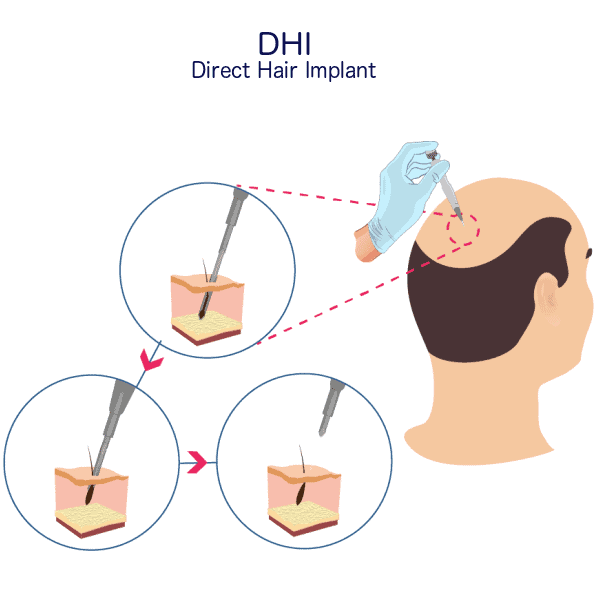
DHI, or Direct Hair Implantation, is one of the most refined approaches to hair transplant surgery available today. At Hair Transplant Edinburgh, our surgical team performs DHI using the Choi implanter pen, a precision instrument that gives the surgeon precise control over the angle, depth and direction of each graft. Because the Choi pen creates the recipient channel and places the follicle in a single motion, the graft spends less time outside the scalp than in conventional FUE, which supports better survival rates and more predictable results.
For patients in Edinburgh and across Scotland who want a high-density outcome with minimal visible downtime, DHI offers a technically demanding but clinically rewarding route to hair restoration.
DHI Hair Transplant in Edinburgh
Most patients who enquire about DHI in Edinburgh are looking for something specific: a natural hairline, dense crown hair transplant coverage or beard restoration where precision and angle control matter more than raw graft numbers. DHI is built for exactly that. It is also the technique we use for transgender hair transplant patients, where precise graft angle and density control are essential for a result that reads as natural.
Our Edinburgh clinic carries out DHI procedures under local anaesthetic on a day-patient basis. Patients arrive in the morning, undergo extraction and implantation with their surgeon, and return home the same day. There are no overnight stays required and no general anaesthetic involved.
The technique suits patients at a range of hair loss stages, though it works particularly well for those targeting a defined area rather than the entire scalp. For patients with diffuse thinning across a larger surface, we may recommend a combined approach or discuss whether FUE hair transplant better fits their situation.
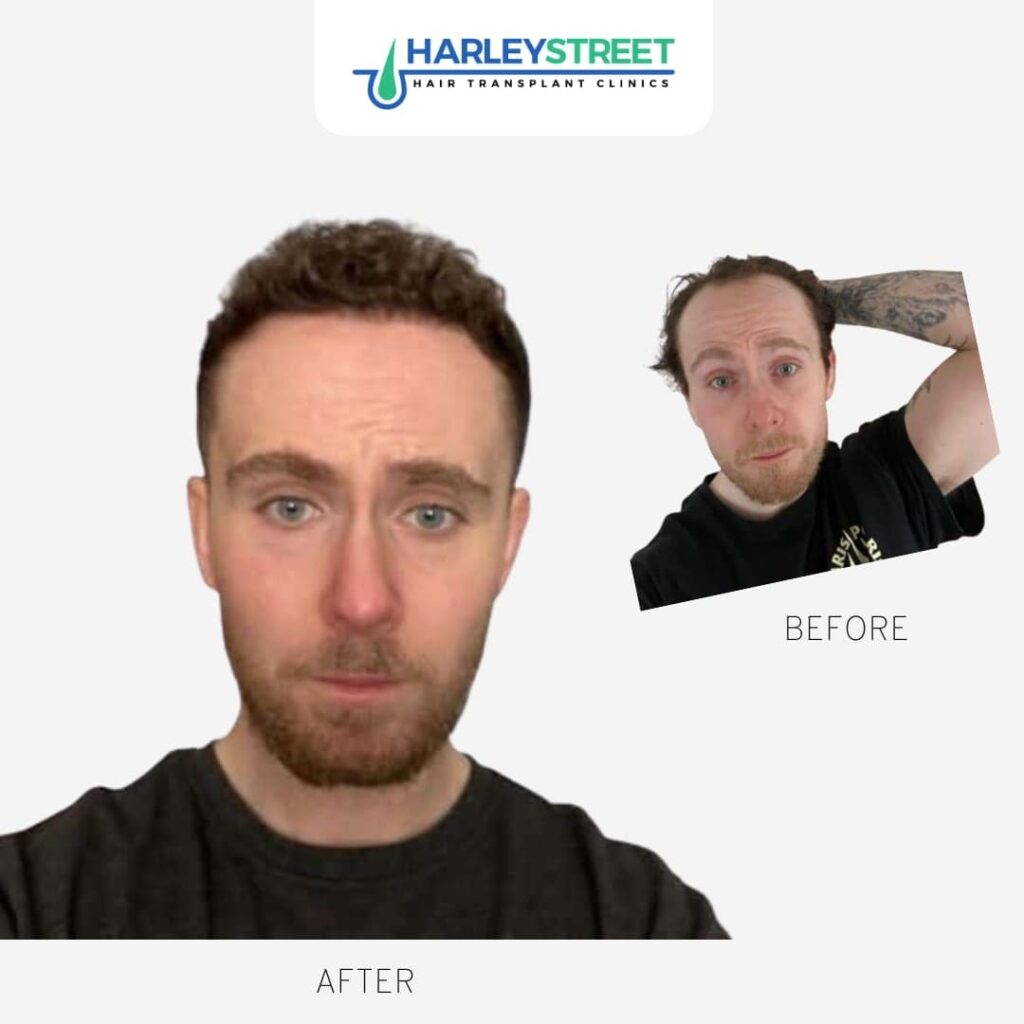
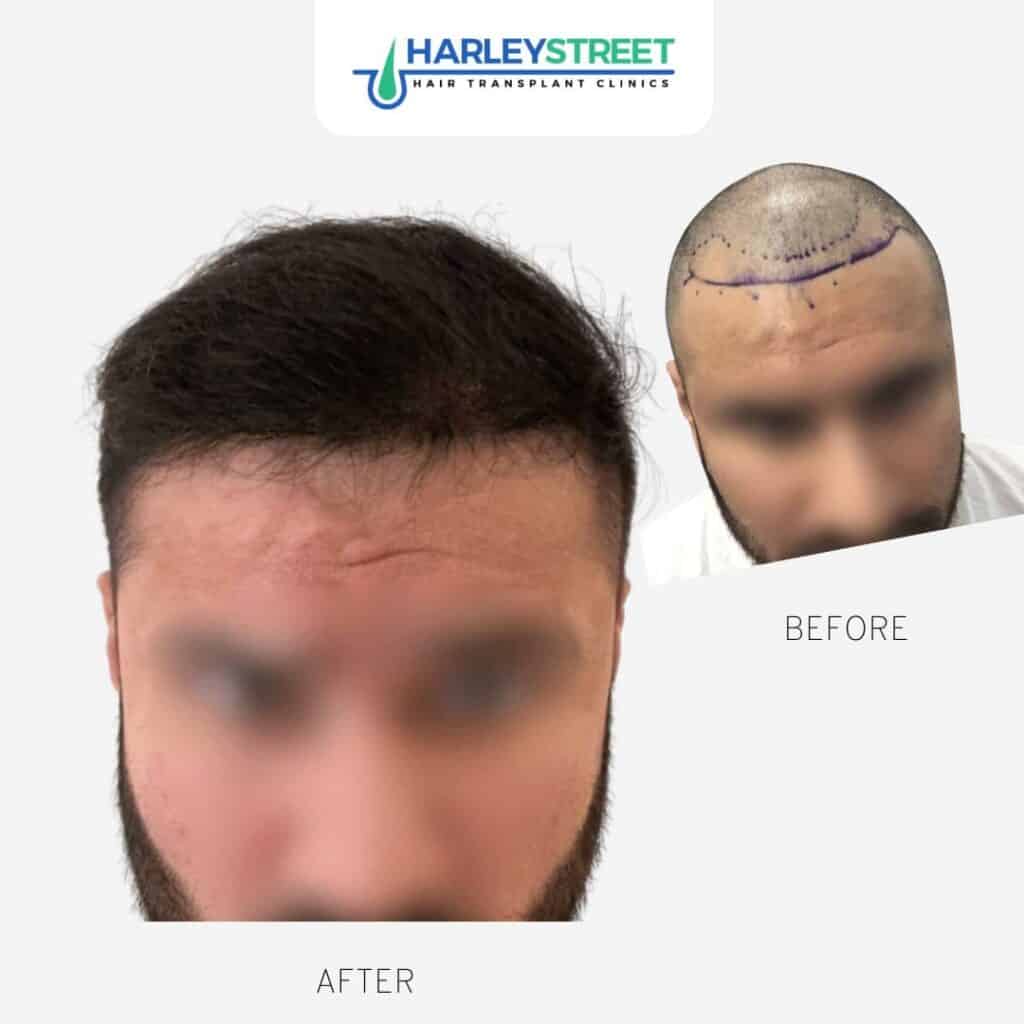
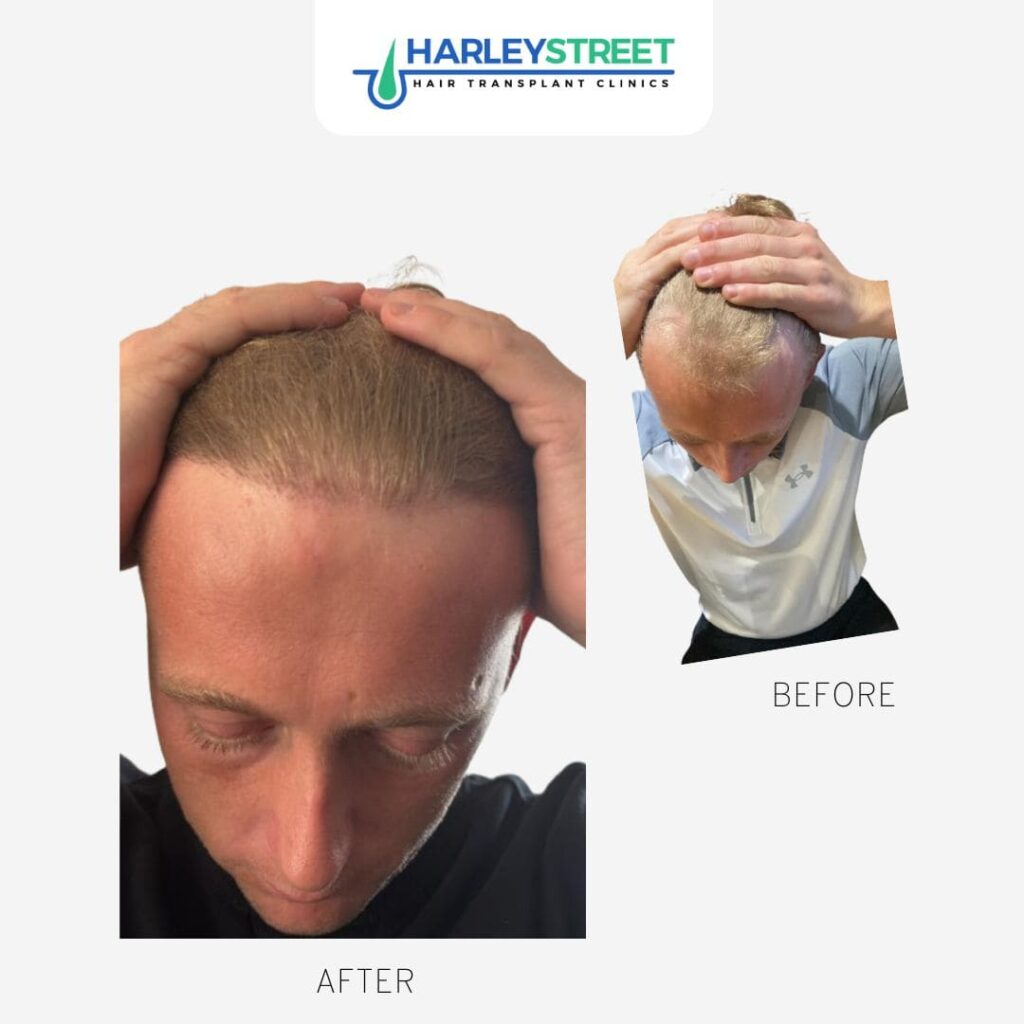
Before and After DHI Hair Transplant Results in Edinburgh
A selection of results from patients treated at our Edinburgh clinic. Every procedure shown was performed by our GMC-registered surgeons. View the full gallery.
How the DHI Technique Works
The defining feature of DHI is the Choi implanter pen. In FUE, the surgeon extracts grafts, stores them temporarily, then creates recipient channels and places grafts in separate steps. With DHI, the loaded pen creates the channel and deposits the follicle simultaneously. This removes one handling step and keeps the graft in a controlled environment for longer.
The surgeon uses pens of different diameters depending on the hair type, with finer pens for facial hair and coarser pens for scalp procedures. The angle and depth of each placement are controlled by hand, which means a skilled DHI surgeon can achieve a very precise hairline hair transplant pattern or a graduated density effect in the crown.
Each stage of the procedure follows this sequence. The donor area, typically the back and sides of the scalp, is trimmed and anaesthetised. The surgeon extracts individual follicular units using a micro-punch tool. The extracted grafts are loaded into Choi pens by two or three trained technicians who manage this process throughout the implantation phase. The surgeon takes a loaded pen, implants the graft into the recipient area without pre-making incisions, then sets it aside. A technician picks it up, reloads it, and returns it to the trolley. This rotation keeps three pens in circulation at all times, ensuring the surgeon never waits and each follicle spends minimal time outside the scalp.
The lack of pre-made channels in the recipient area is one reason some patients experience less bleeding during the procedure and a slightly faster surface healing compared to standard FUE.
DHI vs FUE: Key Differences
Both DHI and FUE extract follicular units individually from the donor area. The difference lies in how those grafts are placed. FUE uses a two-step implantation process; DHI combines channel creation and graft placement into one action.
DHI generally allows for tighter graft spacing, which can produce a denser result in a smaller treatment zone. FUE is more flexible for larger session sizes, as pre-making channels in bulk is faster when treating a wide area. A session of 1,500 to 2,000 grafts suits DHI well. When a patient needs 3,000 or more grafts in a single day, your surgeon may advise FUE as the more practical approach. For patients who need a very high graft count and prefer not to shave the donor area, FUT may also be worth discussing at consultation.
Neither technique is universally superior. The choice depends on the area being treated, the target density, the surgeon’s assessment of your donor supply and the result you are aiming for. Your surgeon will set out the options clearly at your consultation.
Who Is a Good Candidate for DHI in Edinburgh?
DHI works well for patients who are targeting a specific area with a well-defined restoration goal. Good candidates typically share some of the following characteristics.
A stable pattern of hair loss is important. Patients still experiencing rapid or unpredictable hair loss may find results are undermined by continued recession after surgery. For younger patients, we take time at consultation to discuss this candidacy point carefully.
Adequate donor density is essential. If the donor area has been significantly depleted by a previous transplant, or if natural donor density is low, DHI may not be the most suitable choice. Your surgeon will assess the donor zone as part of the consultation.
DHI is also well suited for patients who want beard or eyebrow restoration in Edinburgh. The precision of the implanter pen makes it particularly effective for creating natural-looking facial hair density and direction. We offer beard transplant and eyebrow transplant procedures at our Edinburgh clinic using the DHI method.
DHI Always Starts with FUE: What Patients Often Miss
A common misunderstanding in the hair transplant world is that DHI and FUE are separate techniques competing with each other. They are not. They describe different phases of the same procedure.
FUE, or Follicular Unit Extraction, refers to the extraction method. A micro-punch tool is used to isolate and remove individual follicular units from the donor area. The donor scalp is shaved for this phase regardless of which implantation method follows.
DHI refers to the implantation method. Instead of pre-making incisions and inserting grafts in a separate step, the Choi pen creates the recipient channel and deposits the follicle simultaneously. This is the step where DHI differs from standard FUE.
What this means practically: every DHI procedure begins with FUE extraction. When a patient asks “should I have DHI or FUE?”, the real question is which implantation approach suits their goals. The extraction phase is the same either way.
“No-shave DHI” is another phrase worth clarifying. It refers to the recipient area only. Because DHI does not require pre-made channels across a shaved surface, the top of the scalp can remain unshaved. However, the donor area at the back and sides must still be trimmed short to allow the micro-punch tool to work accurately. No transplant technique allows the donor area to remain fully long on the day of surgery.
Understanding this distinction helps patients compare clinics more clearly and ask better questions at consultation. If a clinic claims you can keep all your hair long throughout a DHI procedure, that claim deserves scrutiny.
DHI Cost in Edinburgh
DHI is typically priced at a premium compared to standard FUE. The additional time and skill required to load and place each graft individually using the Choi pen, combined with the cost of the specialist instruments, means the procedure cost reflects the technical complexity involved.
At Hair Transplant Edinburgh, pricing is calculated per procedure rather than per graft for most session sizes. For a full breakdown of what is included and what to expect in terms of cost, our hair transplant cost Edinburgh covers pricing in detail. A free consultation with one of our surgeons will give you a precise graft count and cost estimate for your specific case.
Make the best investment in yourself and find out more about how we can help eliminate hair loss for good!
Where to Find Us
Hair Transplant Edinburgh is centrally located and easily accessible from across the Lothians and beyond. Find us at our Edinburgh clinic:
Hair Transplant Edinburgh
93 George Street
Edinburgh
EH2 3ES
Our Edinburgh clinic is well connected by public transport:
- Tram: West End Princes Street stop (5 minute walk)
- Train: Edinburgh Waverley and Haymarket stations (both within 15 minutes on foot)
- Bus: Multiple Lothian Buses routes along Princes Street and Queensferry Street
If you are travelling by car, the clinic is a short drive from the city centre with several pay and display car parks nearby in the West End area.
FAQs
DHI, or Direct Hair Implantation, uses a Choi implanter pen to extract and place each follicular graft in a single coordinated action, without pre-making recipient channels in the scalp. Standard FUE creates the channel and implants the graft in separate steps. The DHI approach reduces the time each follicle spends outside the scalp and gives the surgeon very precise control over graft angle, depth and direction. Both techniques extract individual follicular units from the donor area; the difference is in how they are implanted.
A typical DHI session at our Edinburgh clinic takes between five and eight hours, depending on the number of grafts being transplanted. The procedure is carried out under local anaesthetic on a day-patient basis. You arrive in the morning, work through extraction and implantation with your surgeon, and return home the same day. No overnight stay is required.
Yes. DHI is particularly well suited to facial hair restoration because the Choi pen gives the surgeon precise control over implantation angle and depth. This matters significantly for beard and eyebrow work, where the direction of hair growth needs to follow natural facial contours closely. Our Edinburgh surgeons perform both beard and eyebrow DHI procedures as standalone treatments.
Hair growth follows the same general timeline as FUE. Most patients notice the first new growth emerging from around three to four months after surgery. The hair continues to thicken and mature through months six to twelve, with the full result typically visible between twelve and eighteen months post-procedure. A period of initial shedding in the weeks after surgery is a normal part of the process and does not affect the long-term outcome.
DHI does not involve a linear incision in the donor area. Follicles are extracted individually using a micro-punch, leaving very small circular marks that blend into the surrounding hair once recovered. There are no stitches in the donor area and no linear scar. The recipient area heals without visible scarring. This makes DHI a good option for patients who prefer to wear their hair short.
The right technique depends on several factors: the size of the area being treated, your target density, your hair characteristics and your donor supply. DHI is particularly suited to precise, targeted restoration in a defined zone. FUE can be more efficient for larger session sizes. At your consultation in Edinburgh, your surgeon will assess all of these factors and set out a clear recommendation, including which technique is likely to give you the best result for your specific situation.
Patient Testimonials
Aside from achieving fantastic results, we believe that keeping in touch with our patients before, during and after their hair transplantation procedure is paramount – it helps to keep our patients feeling calm and in control. We’re always on hand to provide guidance, support and aftercare advice. Time and again, our patients tell us that this is what sets us apart from other clinics.
You can read our great reviews of FUE hair transplants over on Google and Trustpilot