




Every procedure at Hair Transplant Edinburgh is carried out by a doctor on the GMC register
Our Edinburgh clinic is in the heart of the city, easy to reach by tram, bus, or train
An honest assessment of your donor supply and realistic outcome, no sales pressure, no obligation to proceed
We limit patient numbers so your surgeon gives your case the full attention it deserves
Hair loss affects around one in three women in the UK at some point in their life. It can come on gradually or suddenly, and the causes range from hormonal shifts and autoimmune conditions to physical damage to the follicles from styling. Understanding what is driving the loss determines what treatment is actually appropriate.
At Hair Transplant Edinburgh, Dr Aziz Elgindi, Dr Mohammed Ditta, and Dr Tetiana Mamontova treat women with hair loss at all stages, from the earliest signs of thinning through to established loss that warrants surgical restoration. Not every woman who presents with hair loss is a candidate for a transplant, and part of the consultation is determining which treatment option will produce the best outcome for your specific situation.
Hair Loss in Women in Edinburgh
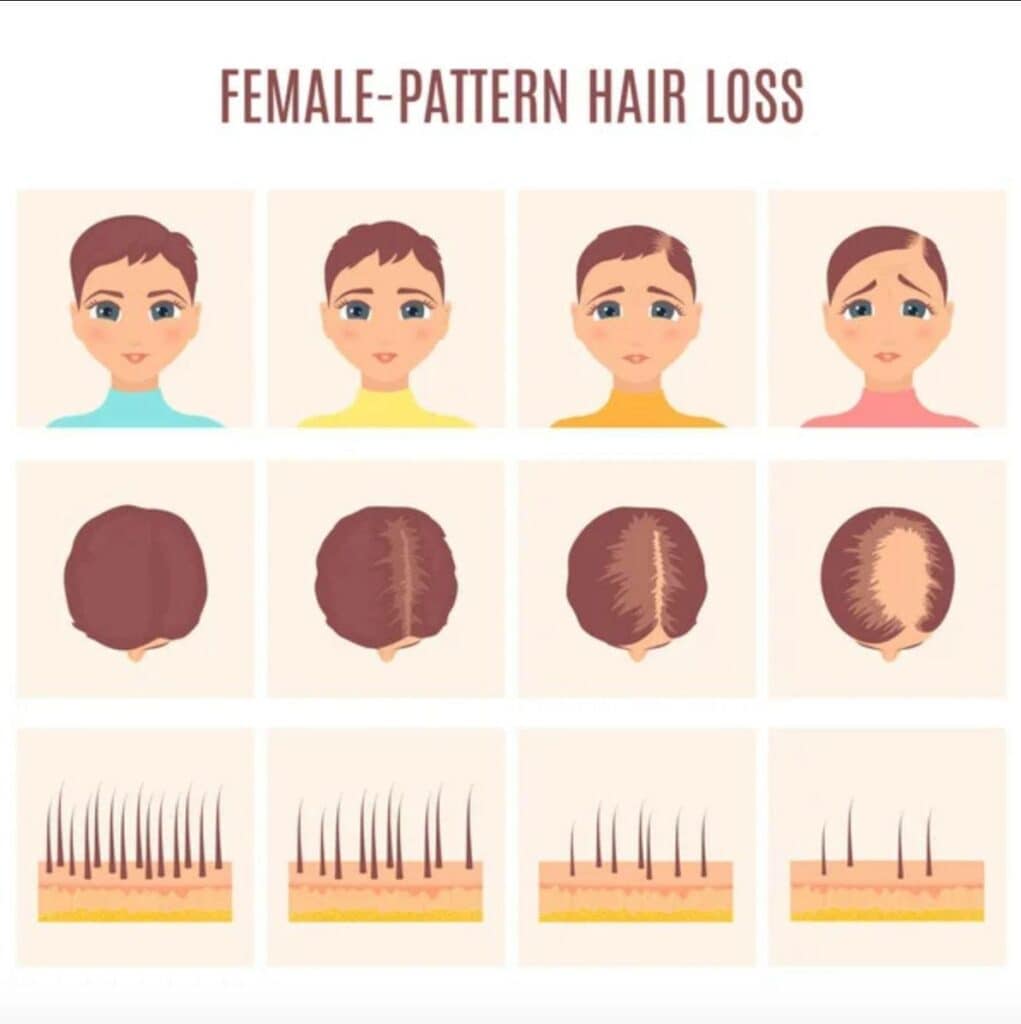
Female hair loss presents differently to male pattern baldness. Where men typically experience a receding hairline and then crown thinning in a recognisable progression, women are more likely to see a diffuse thinning across the top of the scalp with the hairline itself largely preserved. This pattern is classified on the Ludwig scale, which describes three stages of increasing severity.
The Ludwig I pattern involves mild thinning at the crown, often first noticed at the parting. Ludwig II describes more pronounced thinning extending back and to the sides. Ludwig III involves significant thinning across the crown and is associated with the greatest impact on appearance.
Women also experience traction alopecia, alopecia areata, and hair loss driven by medical causes including thyroid dysfunction, iron deficiency, and post-partum changes, none of which follow the Ludwig pattern. Identifying which mechanism is driving the loss matters, because it dictates whether medication, surgery, or a combination of both is the right approach.
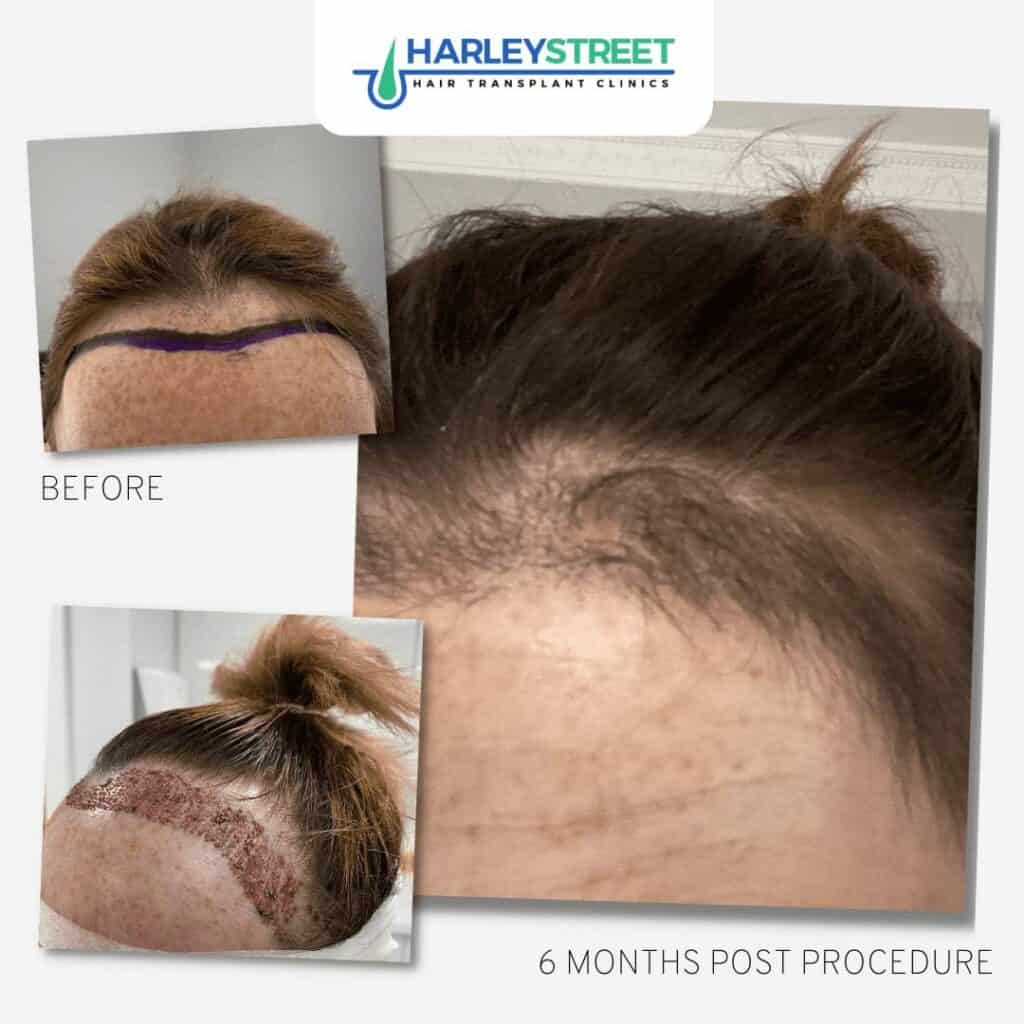
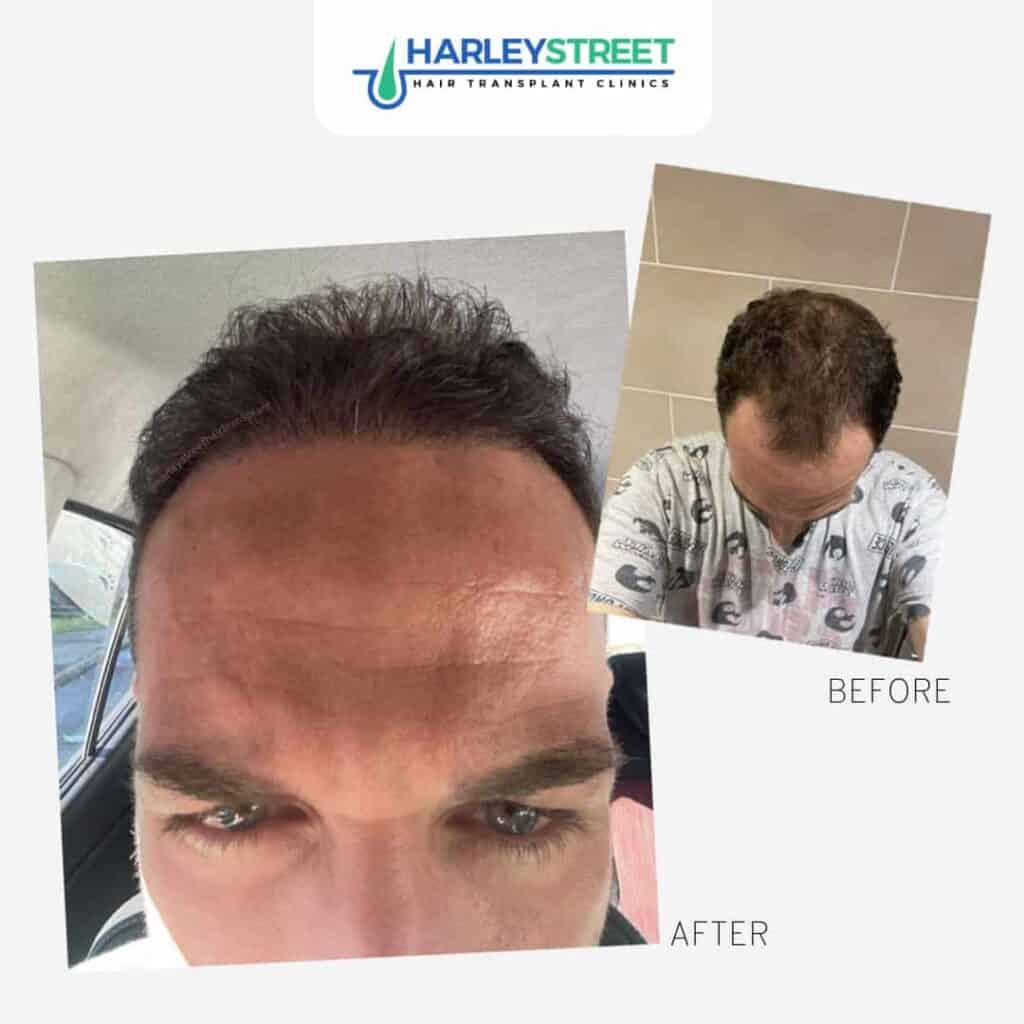
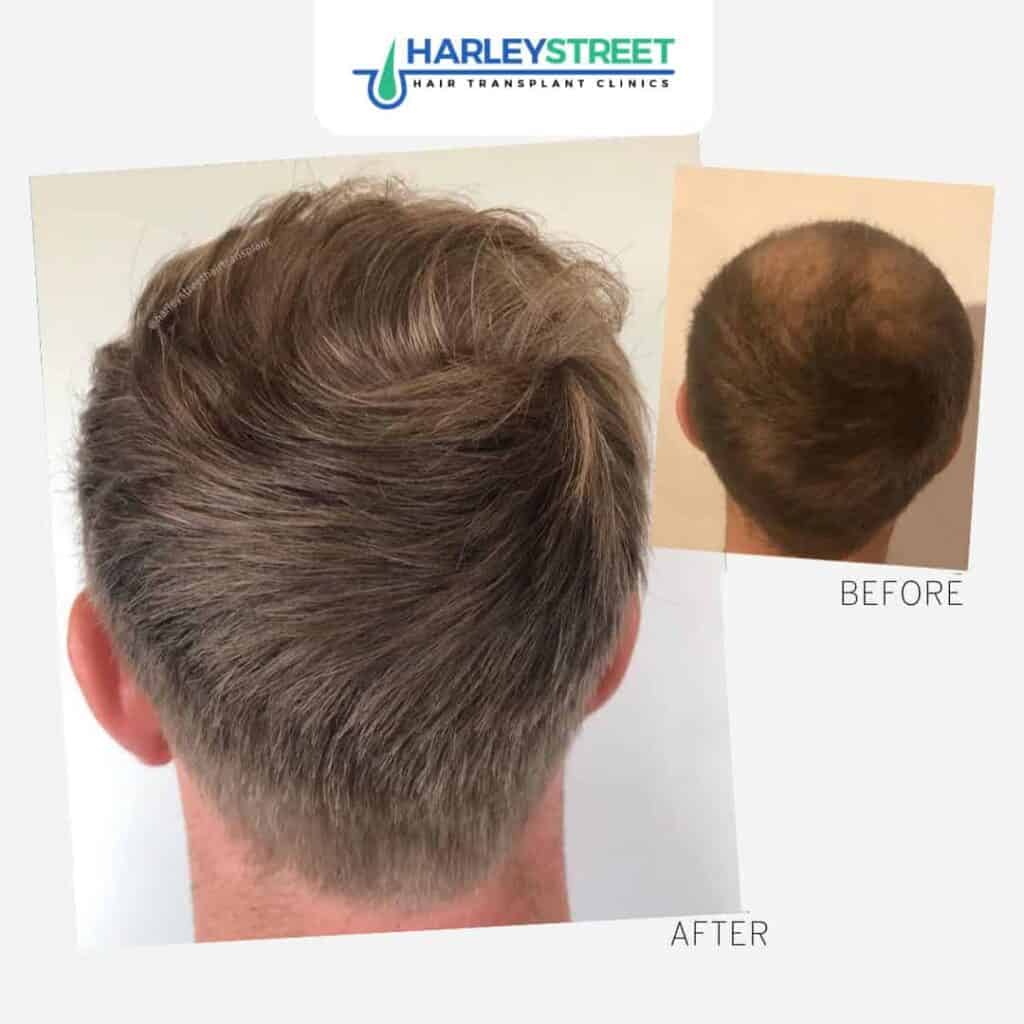
Before and After Women’s Hair Transplant Results in Edinburgh
A selection of results from patients treated at our Edinburgh clinic. Every procedure shown was performed by our GMC-registered surgeons. View the full gallery.
Common Causes of Female Hair Loss
Female pattern hair loss (androgenetic alopecia)
This is the most common cause. It is driven by sensitivity of hair follicles on the scalp to dihydrotestosterone (DHT), a derivative of testosterone. Women produce testosterone in smaller quantities than men, but during perimenopause and after menopause, the ratio of oestrogen to androgens shifts, and follicle sensitivity to DHT can trigger progressive thinning. A hereditary component from either parent can accelerate or intensify this process.
Telogen effluvium
A temporary but sometimes severe shedding response triggered by a physiological shock to the body. Common triggers include childbirth, surgery, severe illness, extreme dietary restriction, or significant psychological stress. Hair loss typically begins six to twelve weeks after the trigger event. In most cases, hair regrows fully once the triggering cause resolves, though the process can take six to twelve months.
Traction alopecia
Caused by prolonged tension on the hair follicles, typically from consistently tight hairstyles such as ponytails, braids, buns, or the long-term use of hair extensions. The earliest sign is recession at the temples and along the frontal hairline. If caught early and the cause is removed, follicles often recover. If tension continues for years, the damage becomes permanent and surgical restoration is the only route to regrowth.
Alopecia areata
An autoimmune condition in which the immune system attacks hair follicles. It typically presents as coin-sized patches of hair loss anywhere on the scalp and can affect the eyebrows and eyelashes as well. The condition is unpredictable, can resolve spontaneously or recur, and is not a candidate for surgical transplant while active.
Medical and nutritional causes
Thyroid dysfunction, iron deficiency anaemia, and coeliac disease are among the most common medical causes of diffuse hair thinning in women. These are systemic conditions and must be treated at source before hair loss treatment can be effective. Blood tests are part of the initial assessment for any patient presenting with unexplained hair thinning.
Treatment Options for Women
Topical minoxidil
The only topical medication licensed for female hair loss in the UK. Applied directly to the scalp once or twice daily, minoxidil prolongs the growth phase of hair follicles and can stabilise thinning and restore some density. It must be used continuously to maintain results. It is most effective in early to moderate androgenetic alopecia. Our clinic also offers oral minoxidil, which your patient advisor can discuss with you.
PRP (platelet-rich plasma) therapy
Platelet-rich plasma injected into the scalp at regular intervals can stimulate follicular activity in areas of diffuse thinning. It is not a transplant and does not restore hair that has been permanently lost, but it can be useful for slowing loss and improving density where follicles remain viable.
Hair transplant for women
Women who have stable hair loss, adequate donor density on the sides and back of the scalp, and areas of established loss with dormant follicles can be suitable candidates for surgical transplantation. The most common procedure for women is FUT (follicular unit transplantation), also known as the strip method, because it allows hair to be harvested without shaving the donor area. This matters for many women who want to keep their existing hair at its current length throughout the process.
FUE is also used in women, particularly where the donor area can be selectively shaved without it being visible, or where only a small graft count is needed. For hairline restoration, including hairline lowering and reconstruction of the temple area after traction alopecia, our hairline hair transplant Edinburgh covers this in detail.
If you are interested in addressing both scalp thinning and eyebrow loss, our eyebrow transplant Edinburgh covers how eyebrow restoration works separately.
Am I a Candidate for a Women’s Hair Transplant?
Women are assessed individually. The key factors are:
- Stability of hair loss: active, progressive loss is not appropriate for transplantation. The loss should be stable for at least 12 months before surgery is considered.
- Donor density: women with diffuse androgenetic alopecia affecting the donor area (sides and back of scalp) may not have sufficient donor hair for a successful transplant. Women with traction alopecia, who have lost hair at the hairline but have good density in the donor zone, are often excellent candidates.
- Cause confirmed: if blood tests reveal an underlying medical cause, this must be treated and hair loss stabilised before any surgical plan is appropriate.
- Realistic expectations: a transplant restores hair in areas where follicles have been permanently lost, but it does not stop ongoing androgenetic alopecia in other areas. Medical management alongside surgery is often the most effective combined approach.
Your hair transplant cost in Edinburgh will depend on the graft count needed. All pricing is discussed at your free consultation. You can also review our general hair transplant cost Edinburgh for an overview of how pricing is structured. For patients who prefer to spread the cost, finance options are available through our patient advisors.
Make the best investment in yourself and find out more about how we can help eliminate hair loss for good!
Where to Find Us
Hair Transplant Edinburgh is centrally located and easily accessible from across the Lothians and beyond. Find us at our Edinburgh clinic:
Hair Transplant Edinburgh
93 George Street
Edinburgh
EH2 3ES
Our Edinburgh clinic is well connected by public transport:
- Tram: West End Princes Street stop (5 minute walk)
- Train: Edinburgh Waverley and Haymarket stations (both within 15 minutes on foot)
- Bus: Multiple Lothian Buses routes along Princes Street and Queensferry Street
If you are travelling by car, the clinic is a short drive from the city centre with several pay and display car parks nearby in the West End area.

FAQs
Yes. Women are well-suited candidates when hair loss is stable, the cause has been identified, and donor density is adequate. The most common scenario is traction alopecia or androgenetic alopecia with good donor reserves. Women with diffuse thinning affecting the entire scalp, including the donor zone, may not be suitable, and the surgeon will assess this at consultation.
Not necessarily. FUT (strip method) does not require shaving the donor area at all. The strip is taken from beneath the existing hair, which covers the scar. FUE requires shaving the extracted area, but this can often be done selectively in a small section covered by surrounding hair, so it is not visible at normal hair length. Your surgeon will discuss the approach that best fits your hair length and density.
Male pattern baldness typically follows the Hamilton-Norwood pattern, with a receding hairline progressing through the temples and crown. Female pattern hair loss, classified on the Ludwig scale, usually presents as diffuse thinning across the top of the scalp with the frontal hairline preserved. Both are driven by DHT sensitivity in genetically predisposed follicles, but the distribution differs, and the treatment approach is adapted accordingly.
Permanent hair loss occurs when follicles have been irreversibly damaged, either by years of sustained tension (traction alopecia), scarring, or advanced androgenetic alopecia. A consultation with one of our surgeons, including scalp examination and review of your hair loss history, will determine whether follicles in the affected area are dormant or permanently inactive. Blood tests are ordered if there is any suggestion of a medical cause.
Yes. Telogen effluvium, the most common form of stress-related hair loss in women, is a temporary but often dramatic shedding that occurs six to twelve weeks after a significant stressor. The stressor can be physiological (surgery, illness, childbirth) or psychological. Fortunately, this form of hair loss resolves on its own once the trigger passes, typically within six to twelve months, without requiring surgical treatment.
The graft count for women depends entirely on the area being treated. Hairline restoration, including correction of traction alopecia at the temples, typically requires 1,500 to 2,500 grafts. Women needing a broader reconstruction due to extensive traction alopecia or androgenetic alopecia may require more. Your surgeon will map the recipient area at consultation and confirm the graft count needed before any procedure is planned.
Patient Testimonials
Aside from achieving fantastic results, we believe that keeping in touch with our patients before, during and after their hair transplantation procedure is paramount – it helps to keep our patients feeling calm and in control. We’re always on hand to provide guidance, support and aftercare advice. Time and again, our patients tell us that this is what sets us apart from other clinics.
You can read our great reviews of FUE hair transplants over on Google and Trustpilot